
Part 4: The Foundation | Living the Plan: Navigating Work and Routines
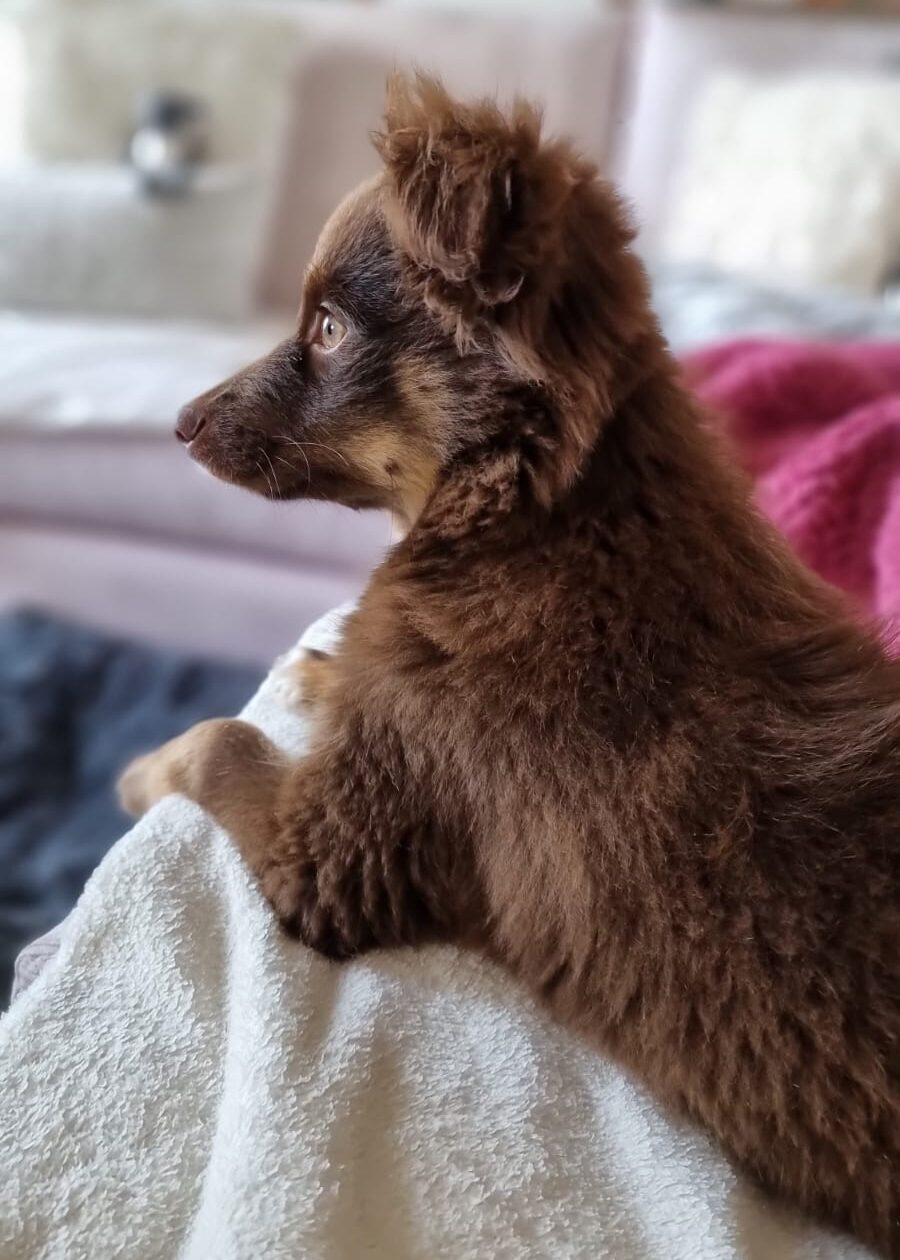
With the ‘little brown bear’ officially named Monte, the focus shifted from theoretical research to the practical reality of daily life. The immediate challenge was the logistics of balancing a puppy’s needs with a work schedule that required me in the office three days a week.
Managing the Space
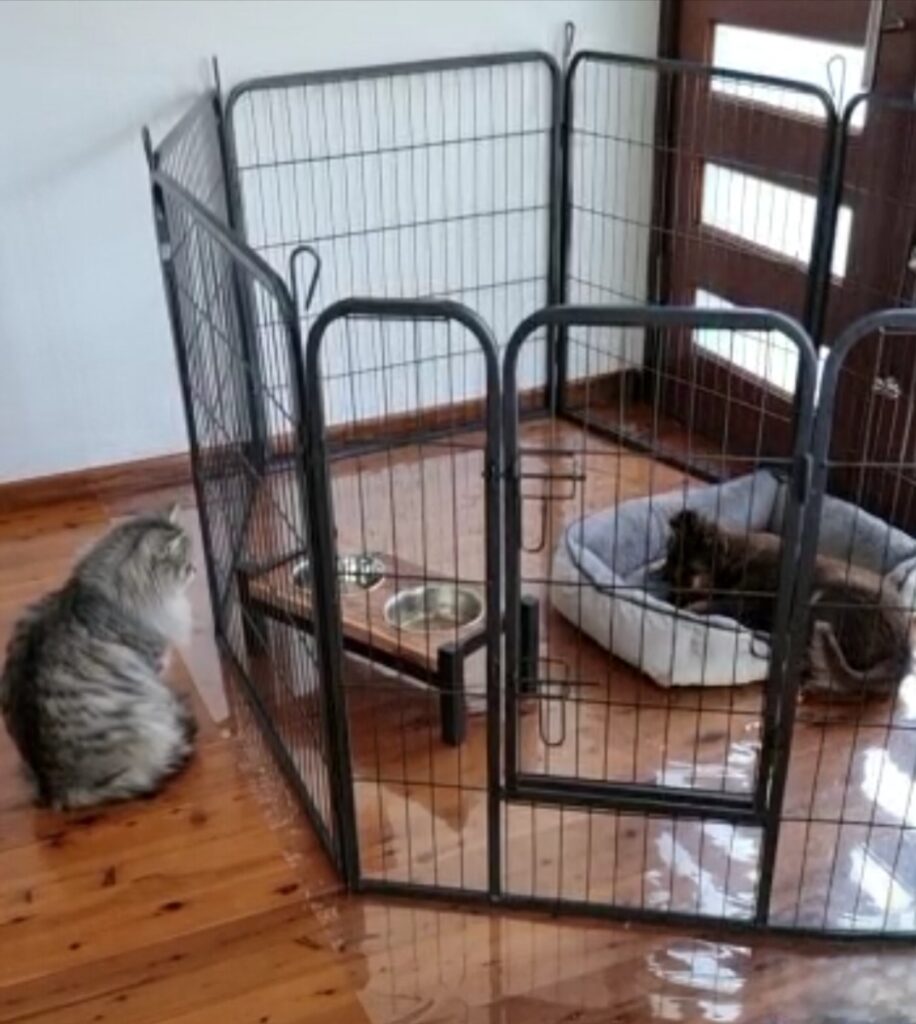
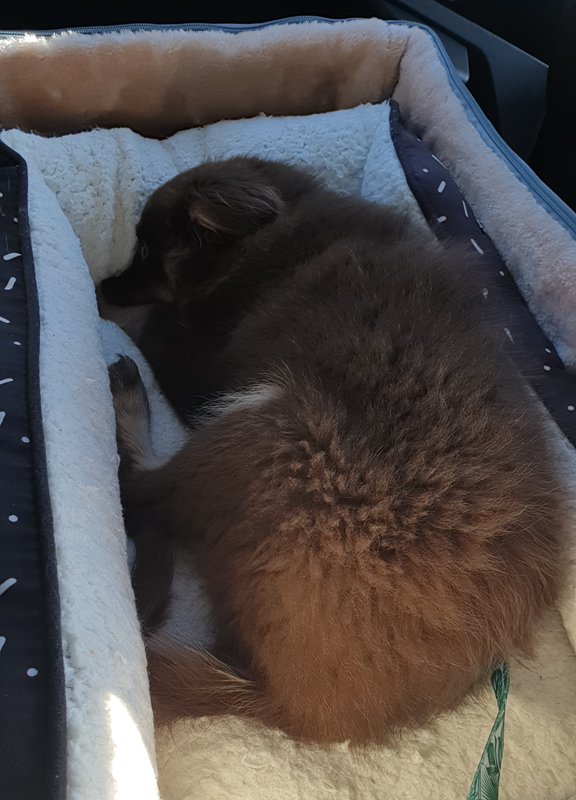
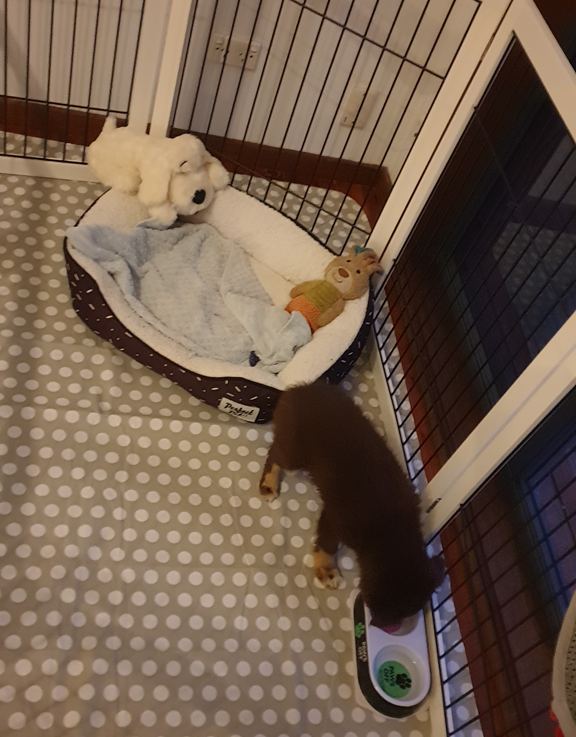
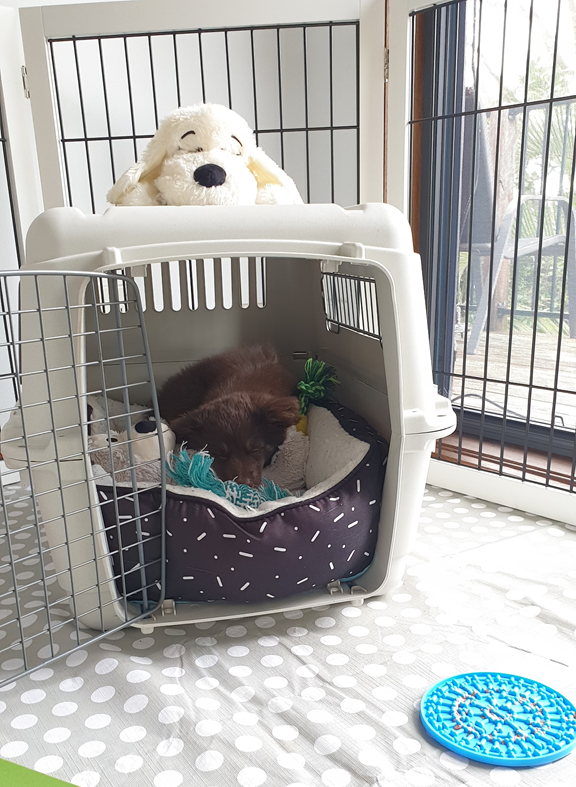
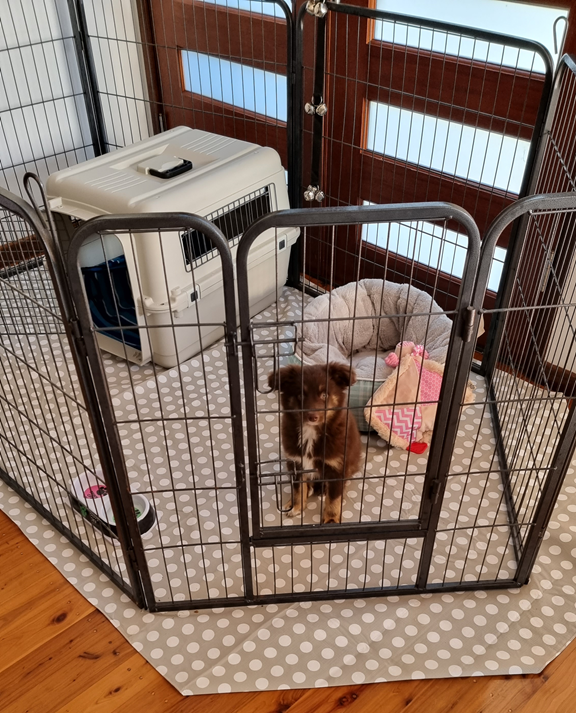
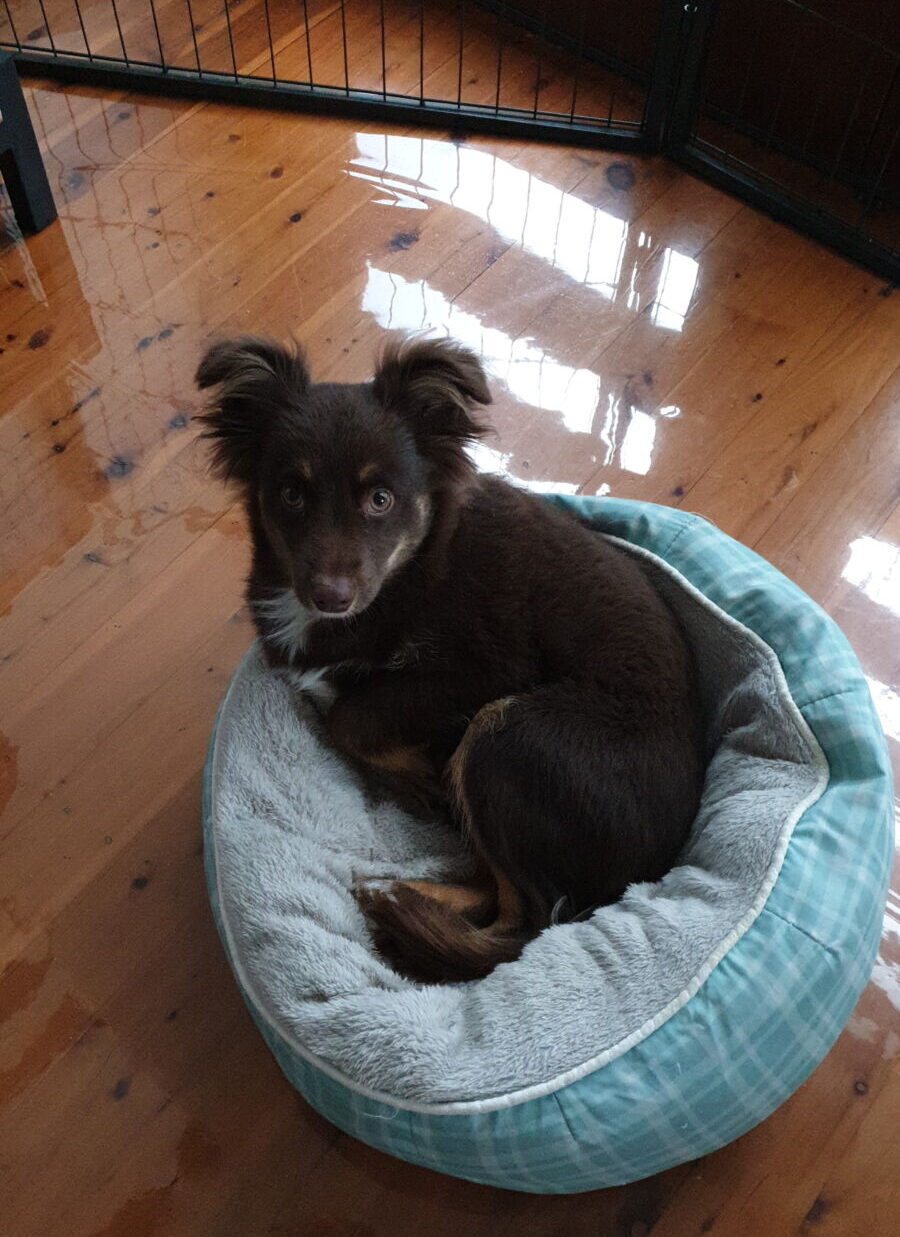
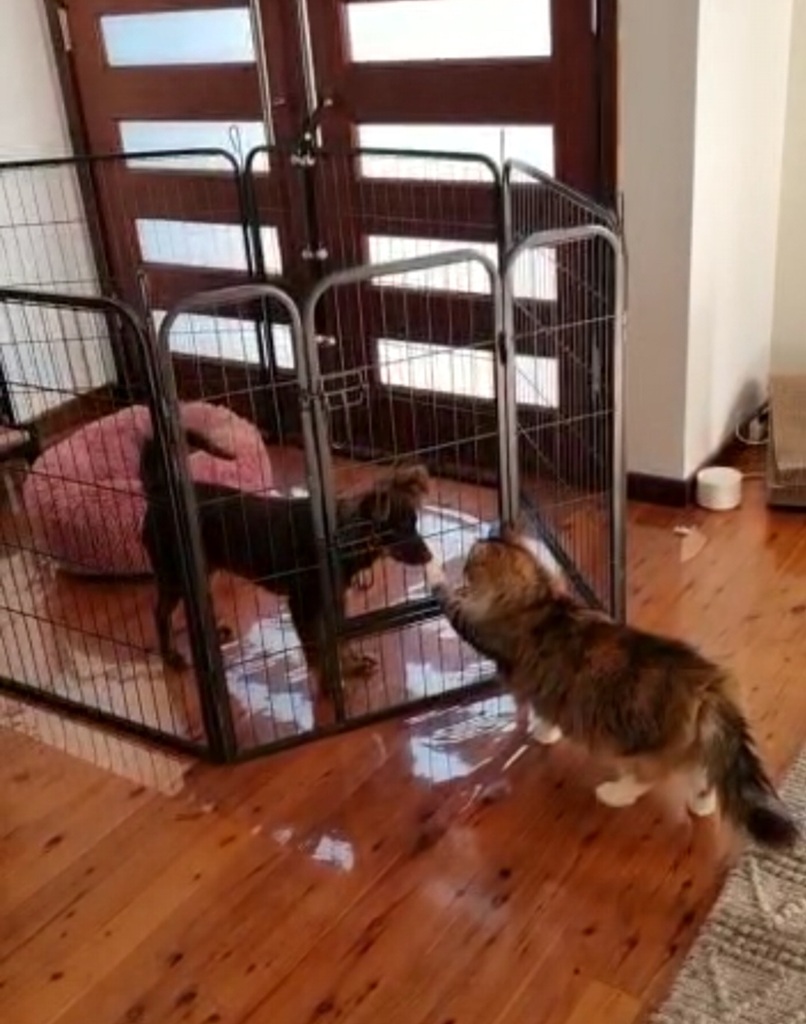
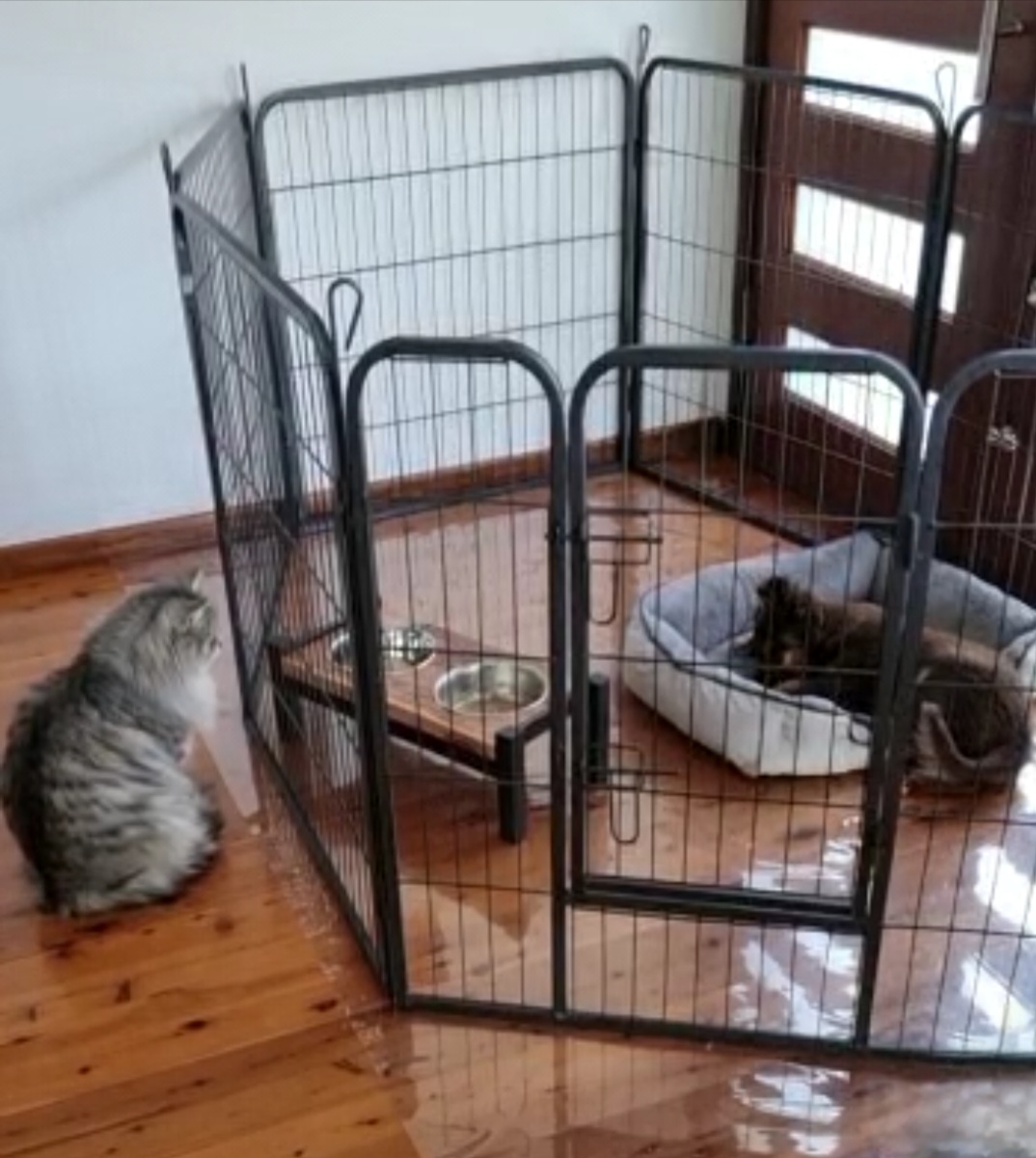
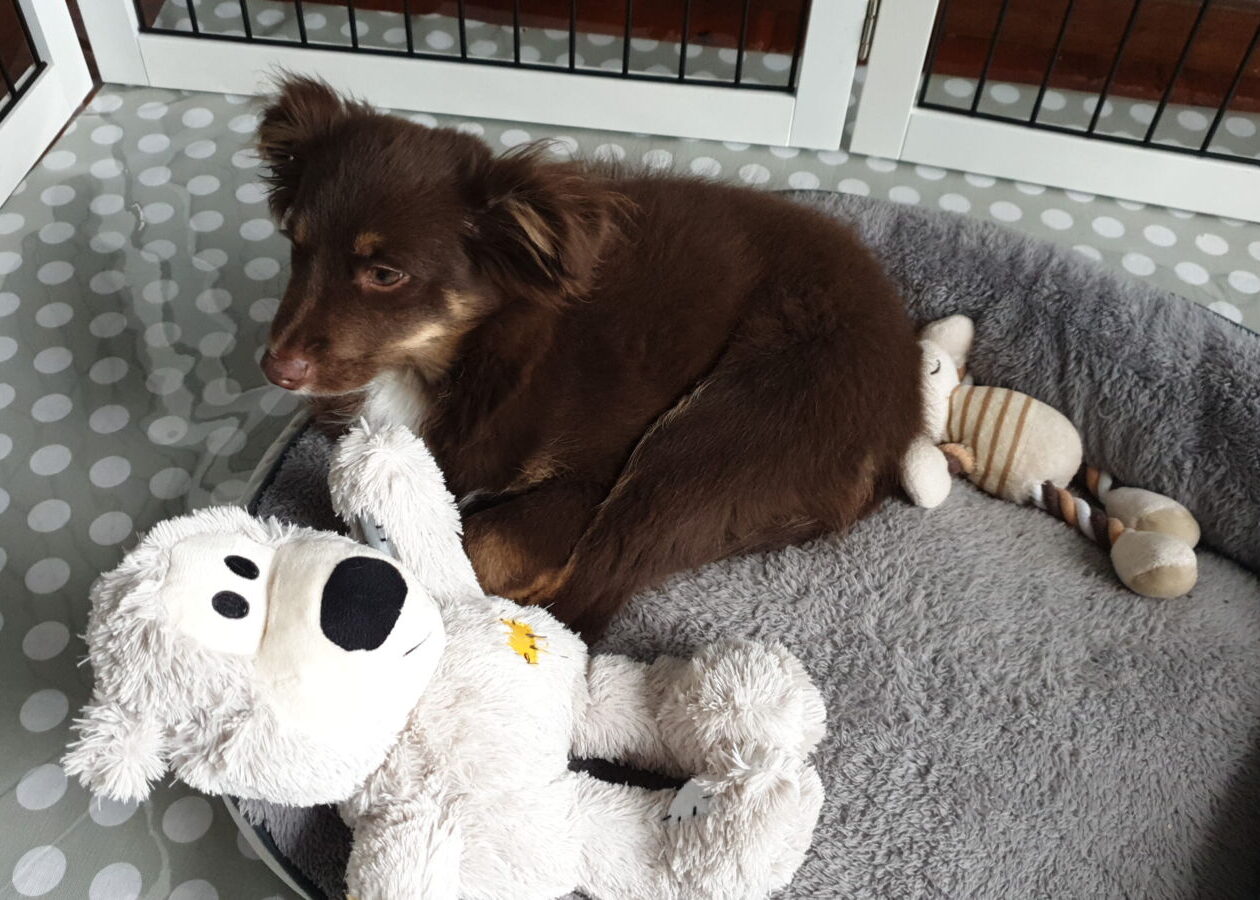
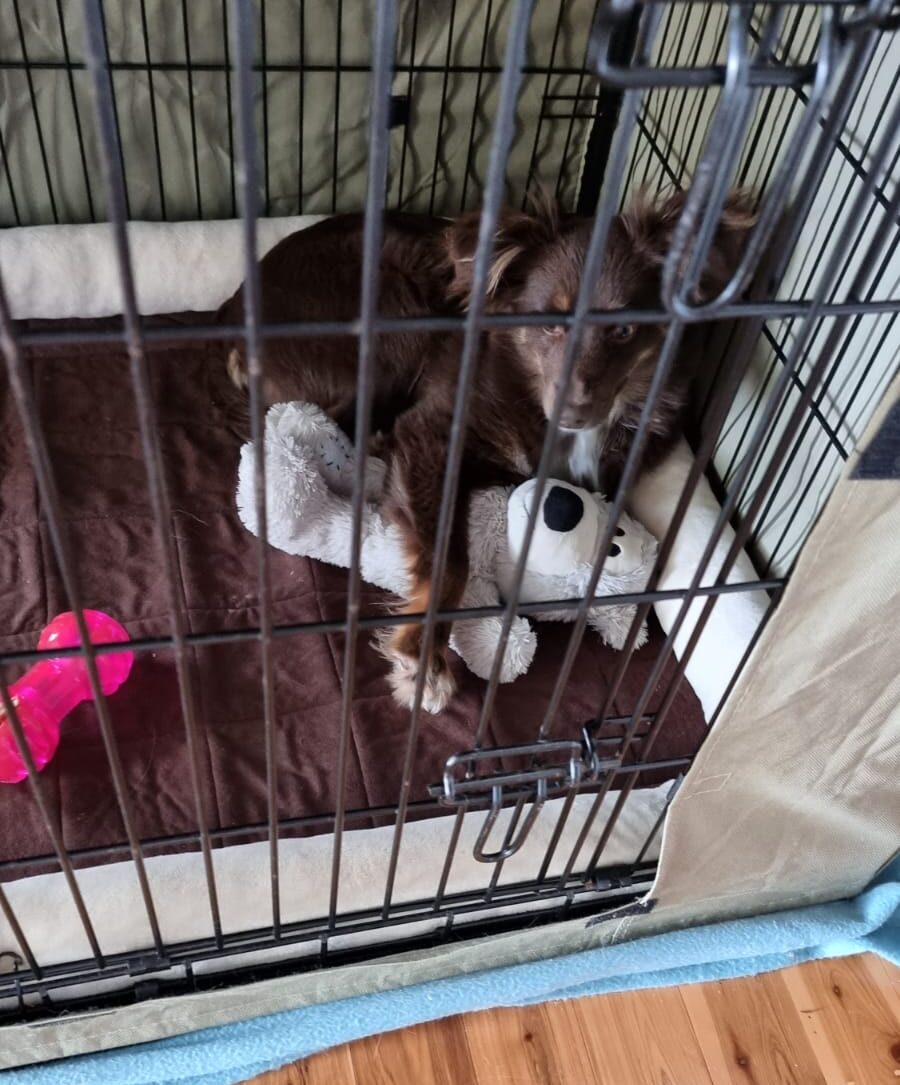
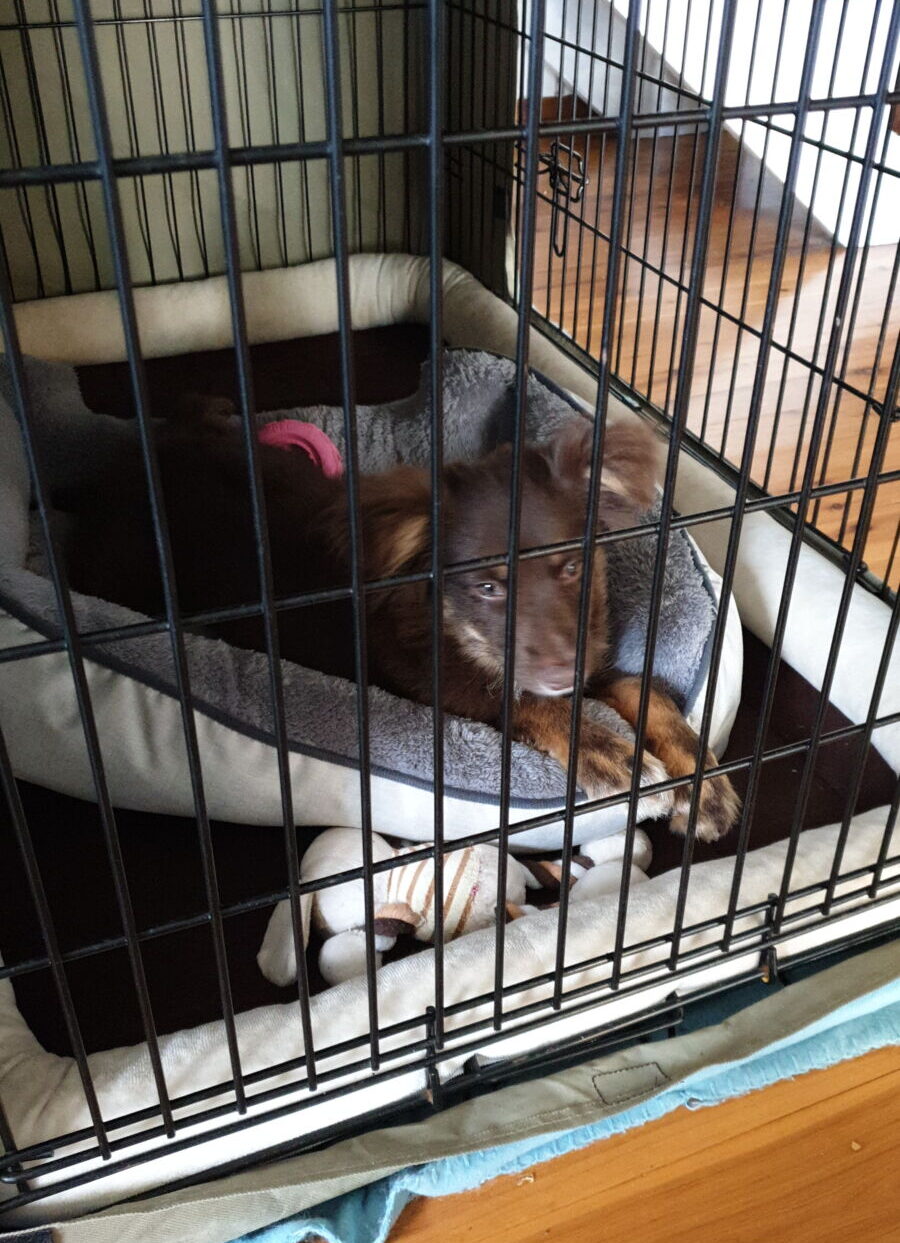
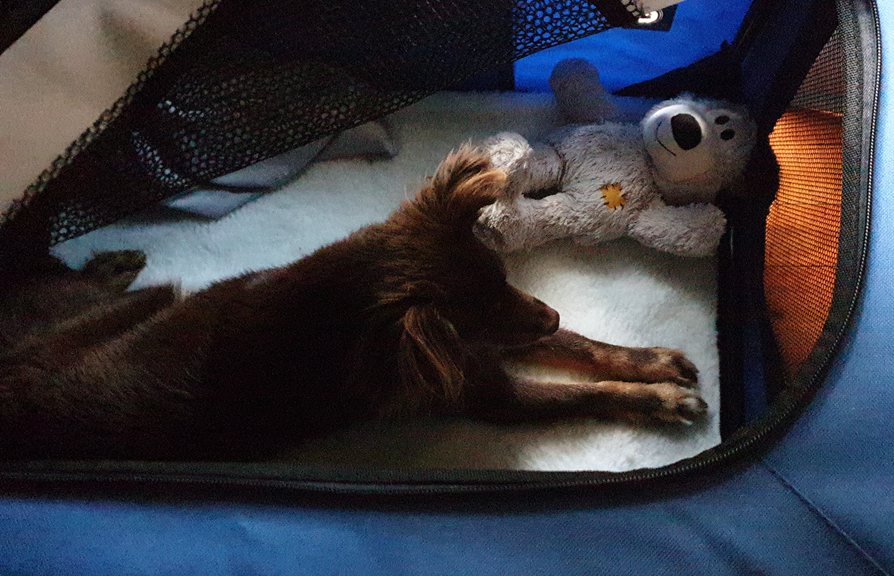
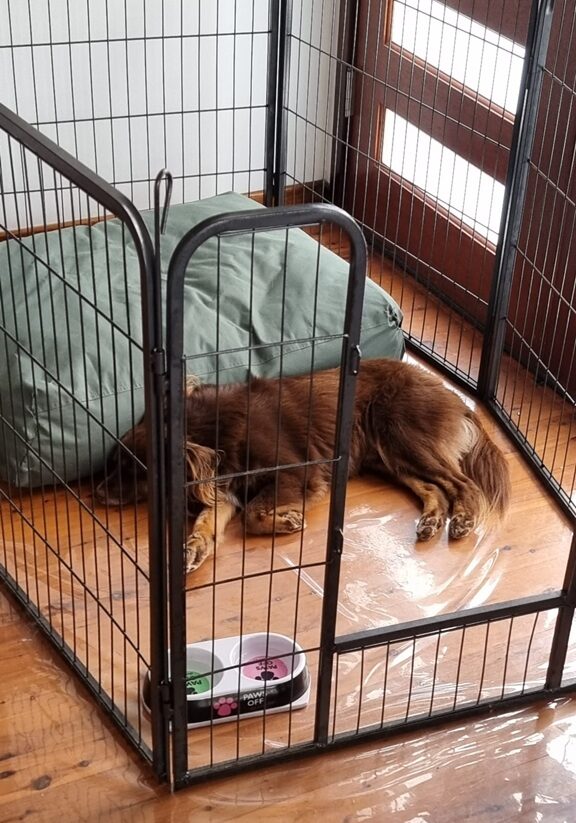
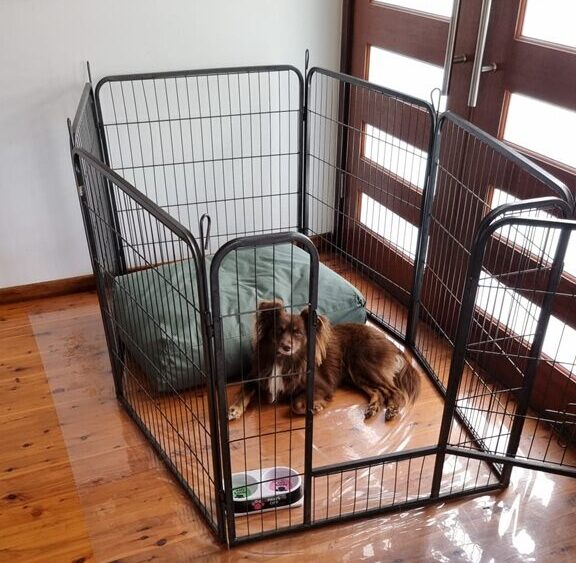
Living in a tri-level home with open staircases and two cats meant I had to be very intentional about where Monte spent his time. I set up two play pens, with the upstairs one being his main base. Inside that pen, I kept his smaller transport crate with the door open and a bed inside. I wanted him to have a “safe spot” he could retreat to whenever he needed a quiet moment.
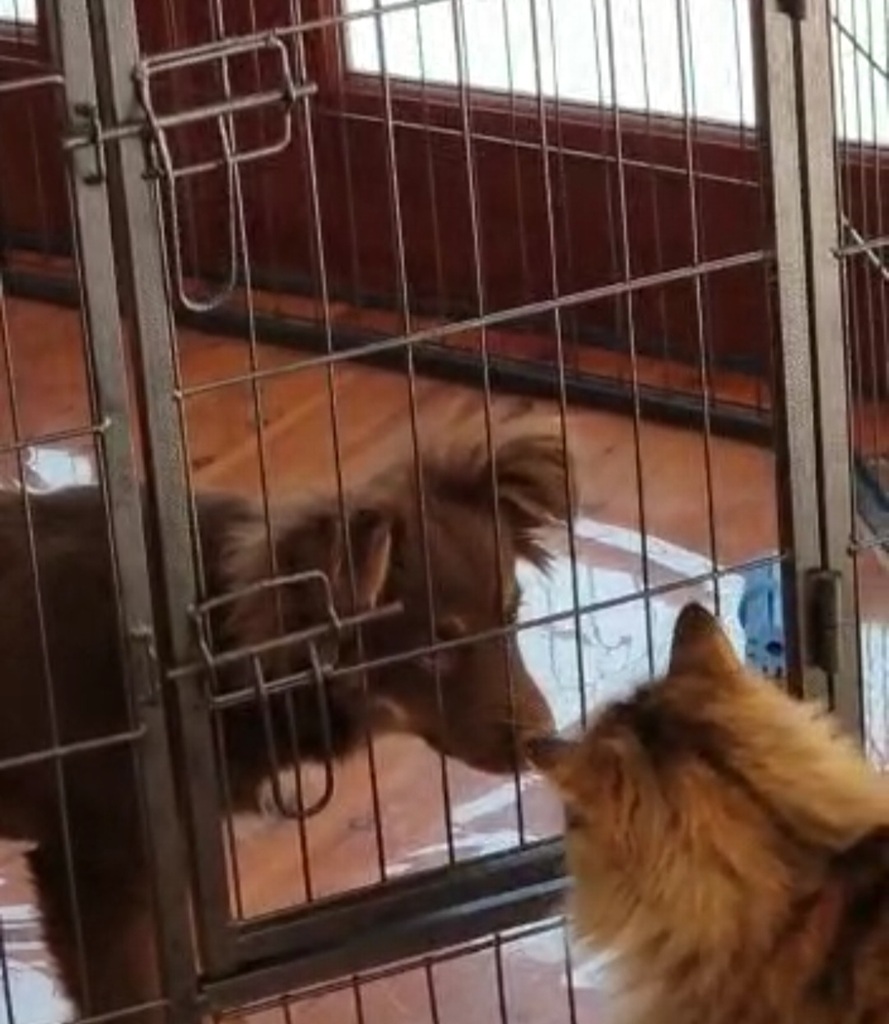
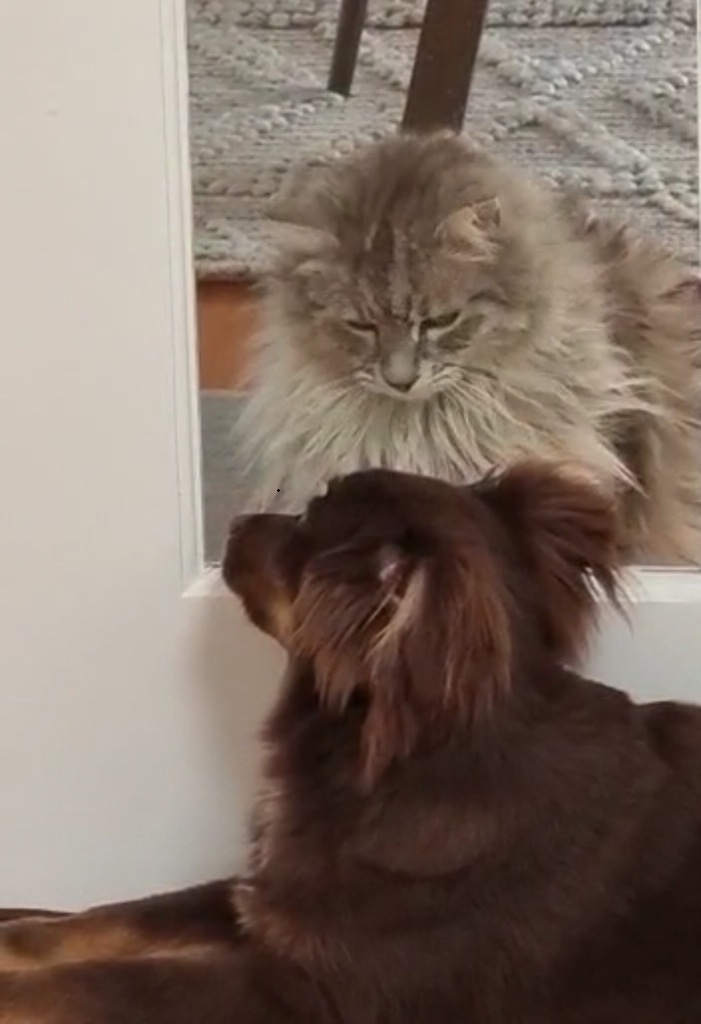
The surprising thing was how much he respected those boundaries. Even though one of the pens was quite low, he never tried to climb out or escape. He genuinely seemed to consider it his own room; even when the gate was wide open. He would often just wander back in there on his own. It also gave my cats the space they needed to get comfortable. They eventually started walking right up to the pen to check him out, knowing they were safe on the other side.
The 24/7 Routine
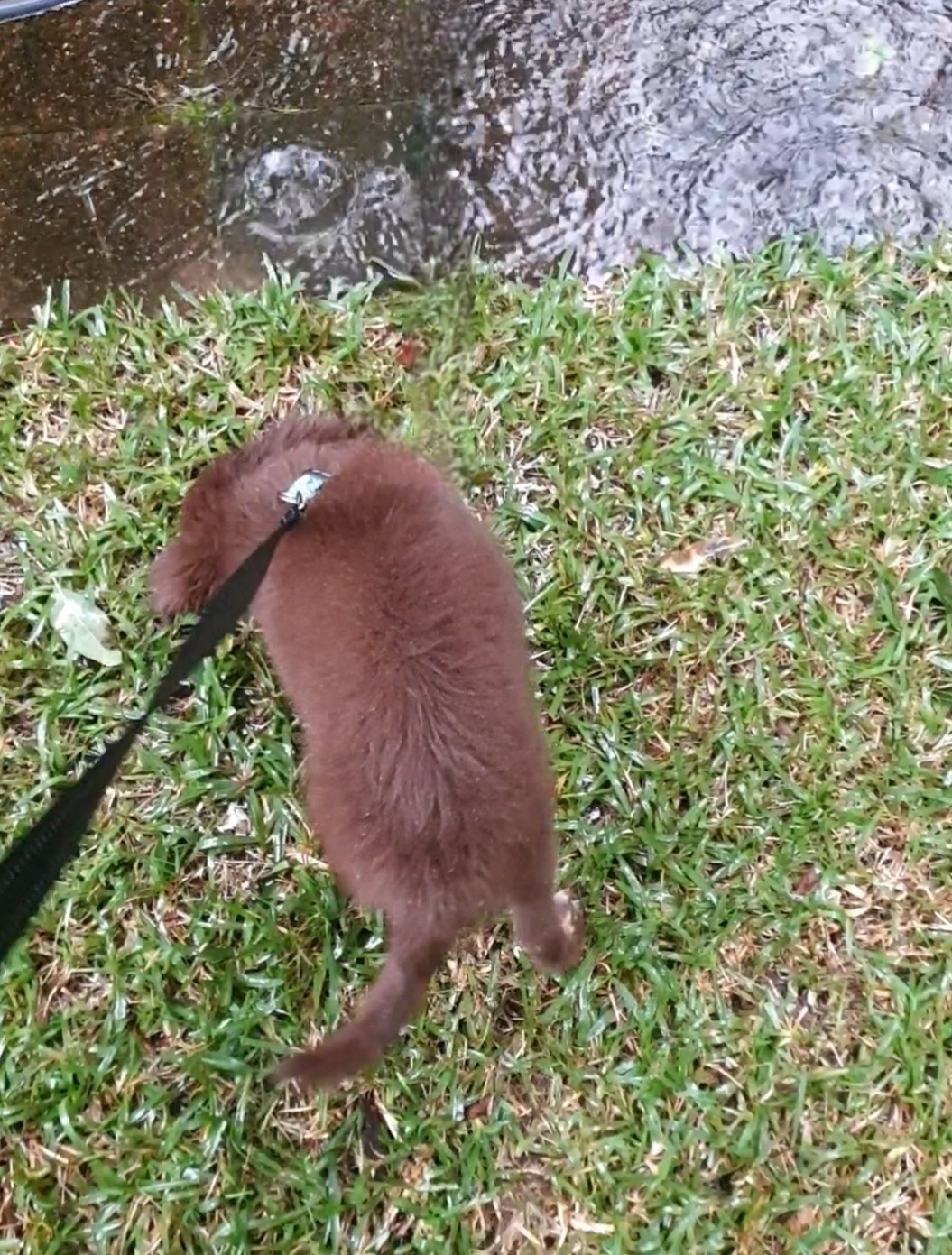
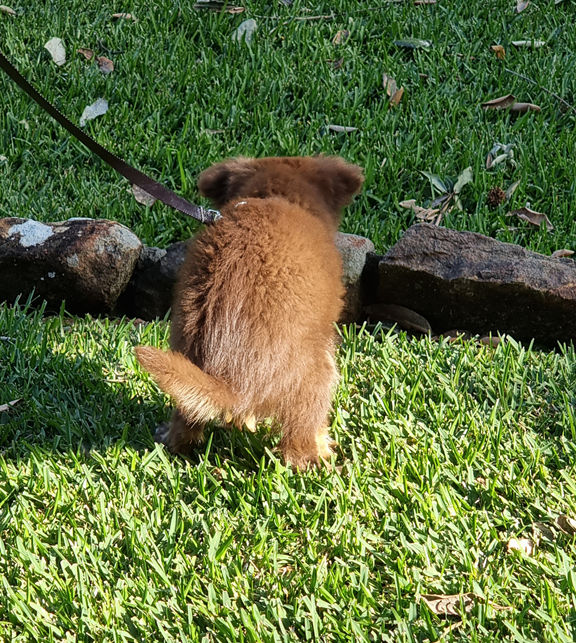
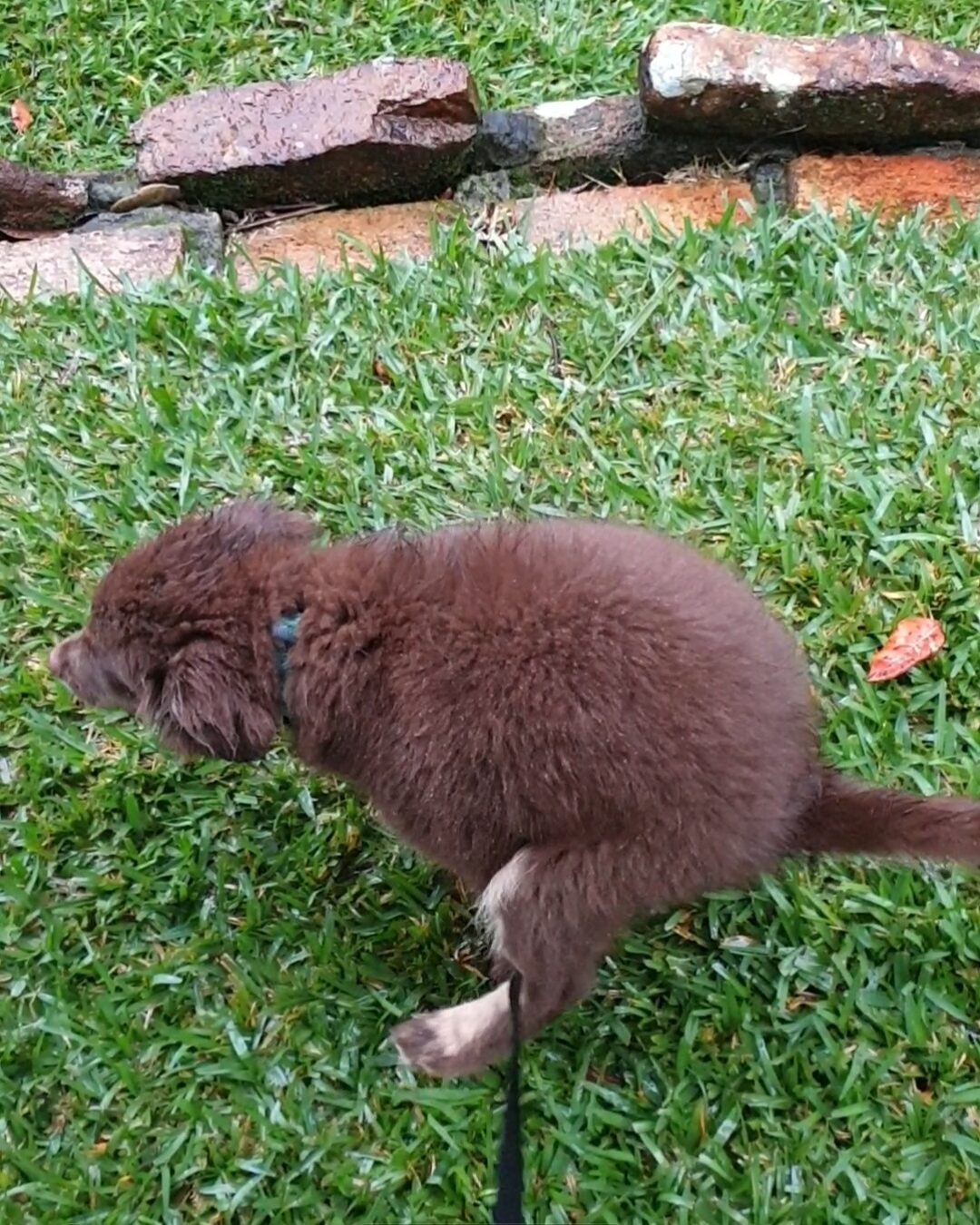
The first few weeks were a bit of a blur of sleeping with one eye open. I had a soft crate set up next to my bed so I could hear him stir. Initially, I was up roughly every two hours to take him outside. I decided very early on that I didn’t believe in using “wee pads” inside the house. I wanted to maintain a clear distinction that business was to be done outside only.
Because of that commitment, the effort was worth it. Throughout his entire puppyhood, Monte only ever had a couple of accidents in the house, and those were on me for missing the timing. As he got older, we could gradually prolong the time between bathroom breaks. Eventually, I stopped the scheduled alarms and only took him out at night if he actually woke up. To transition away from that strict daytime schedule, I introduced a dog talking button by the door. Teaching him to press it gave him a way to ‘speak up’ whenever he needed a break between our usual trips.
The Work-Life Balance
The logistics of my three-day office schedule required a real tag-team effort. I would never have been comfortable leaving a puppy alone for three full days. It simply isn’t fair, and it’s impossible to maintain proper toilet training without someone there.
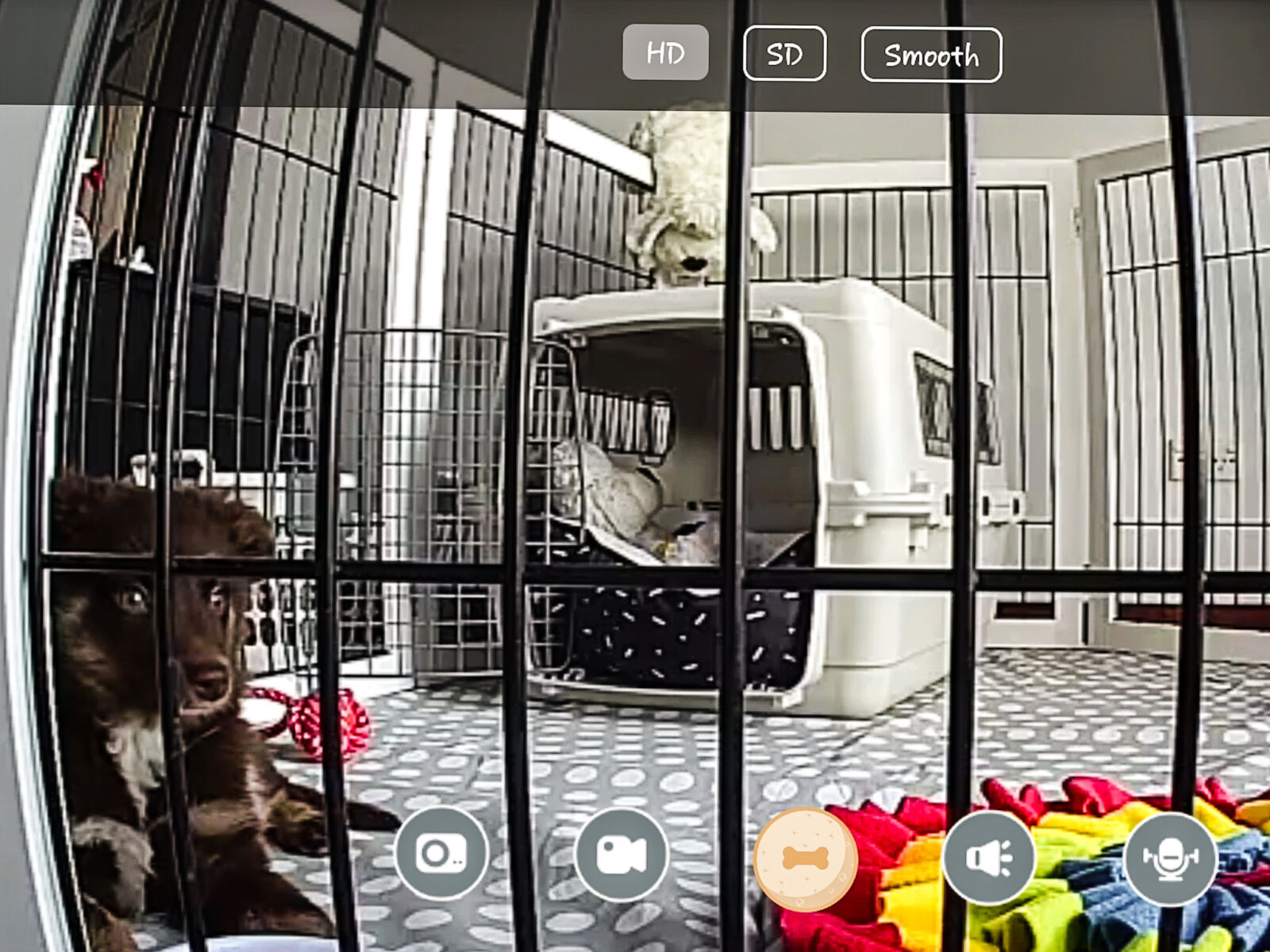
I would get up early for a solid cuddle, some play, and short training beats using his breakfast ration. As he settled for a nap, I headed to the office while my husband took over. I was lucky to have the flexibility to finish early and work from home some afternoons. Without that overlap, I am not sure how we would have coped. We used a puppy cam to keep an eye on him, occasionally popping our heads in for a quick cuddle or bathroom break to keep him reassured.
Building Confidence with Crates and Games
We gradually started testing leaving him in the crate with just his bed and water for small blocks of time. I used Susan Garrett’s crate games and a few other methods to make sure he saw the crate as a positive place. I know crating isn’t for everyone, but for us, with the cats and the open stairs, it was the only way to ensure everyone stayed safe. Because we started this from the very beginning, Monte never showed any real anxiety about it, just the occasional puppy tantrum which is to be expected.
Socialising and the Hills Dog Club
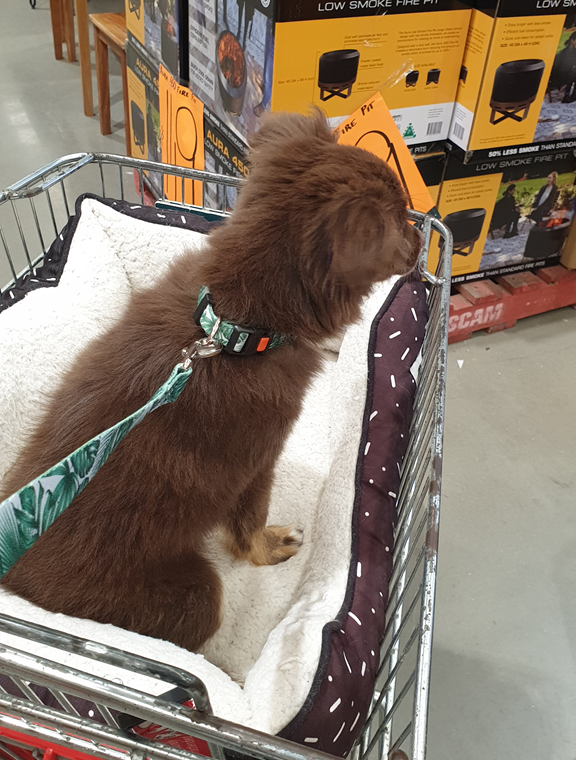
While we waited for him to be fully vaccinated, we stuck to the backyard for exercise while still making an effort to get him out in the world. He became a regular at coffee shops and even the occasional Bunnings trip, which he absolutely loved.
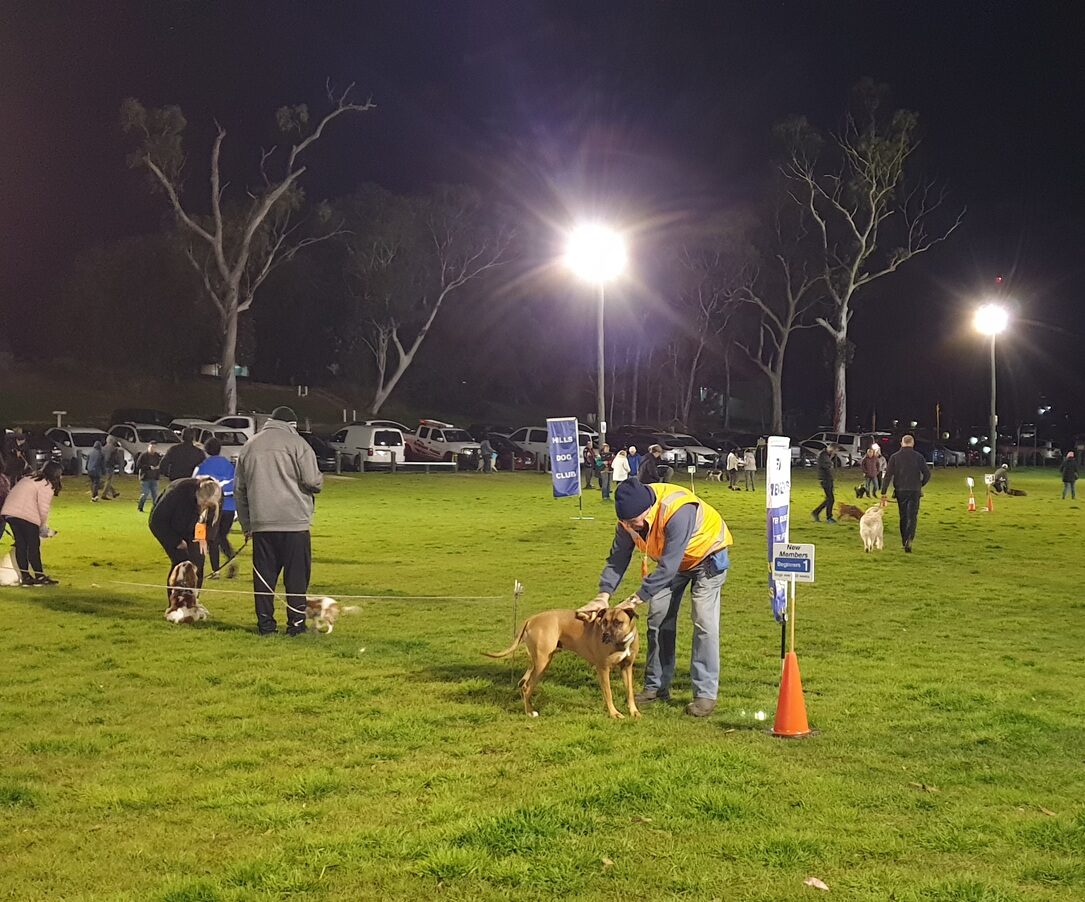
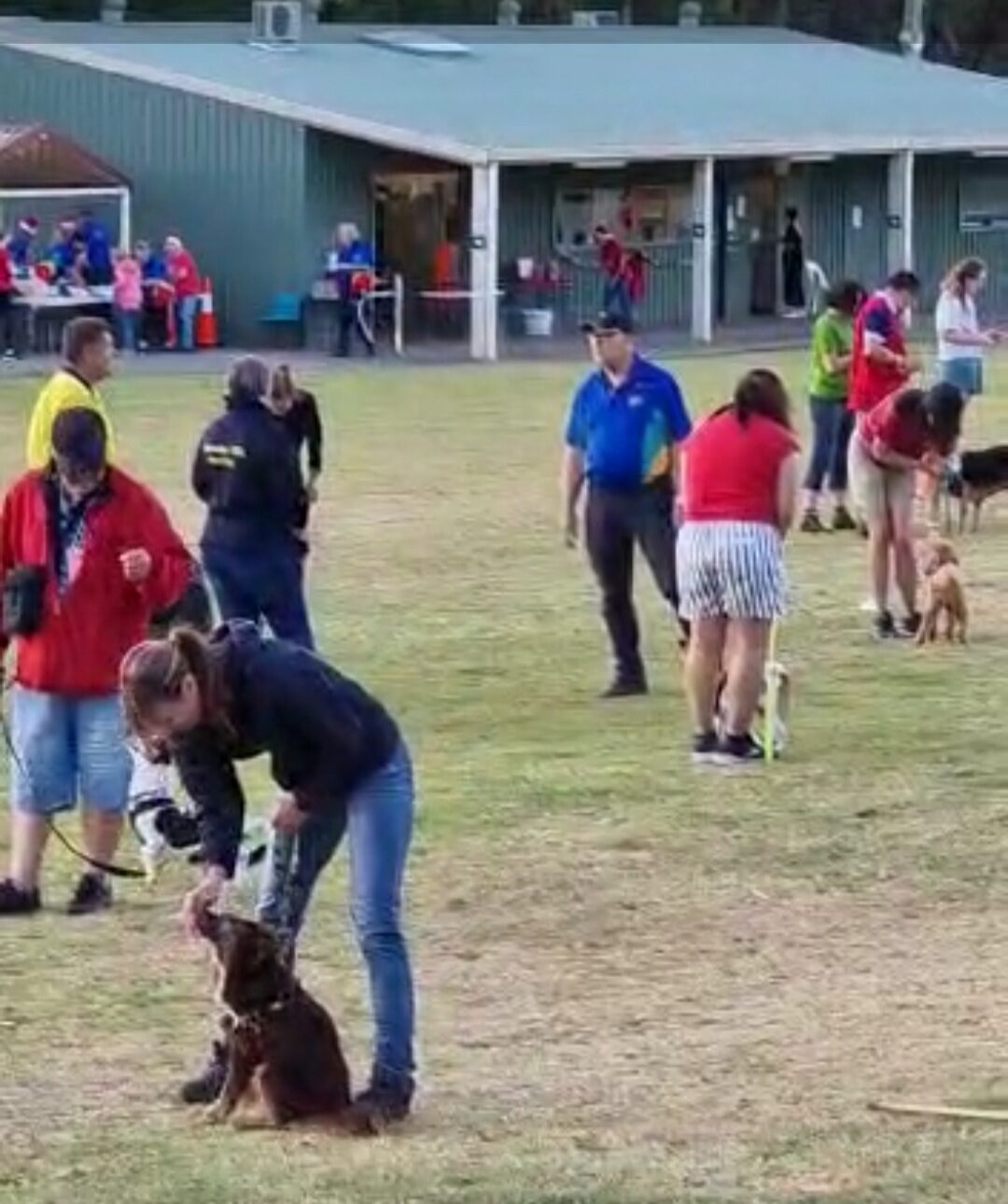
Once he was cleared by the vet, I wanted to start proper training. I wasn’t interested in a one-off class; I wanted something long-term. This is how I found the Hills Dog Club at Castle Hill. It is run by volunteers and has a great system where you progress through several levels right up to full obedience training. You can go once or twice a week, and after the joining fee, it was only $5 per session. Having so many other dogs around was perfect for teaching Monte to focus in a distracting environment. They also have options for trick training and agility once he is older, so it was a path we could stay on for a long time.
Looking back, consistency and perseverance were the keys; even then, the effort was already starting to pay off.
Ready for the next chapter? Part 5: First Puppy Essentials| Research vs. Reality: My Master Checklist