
Dog Talking Buttons: Beyond the “Party Trick”
Leveraging communication buttons for functional autonomy.
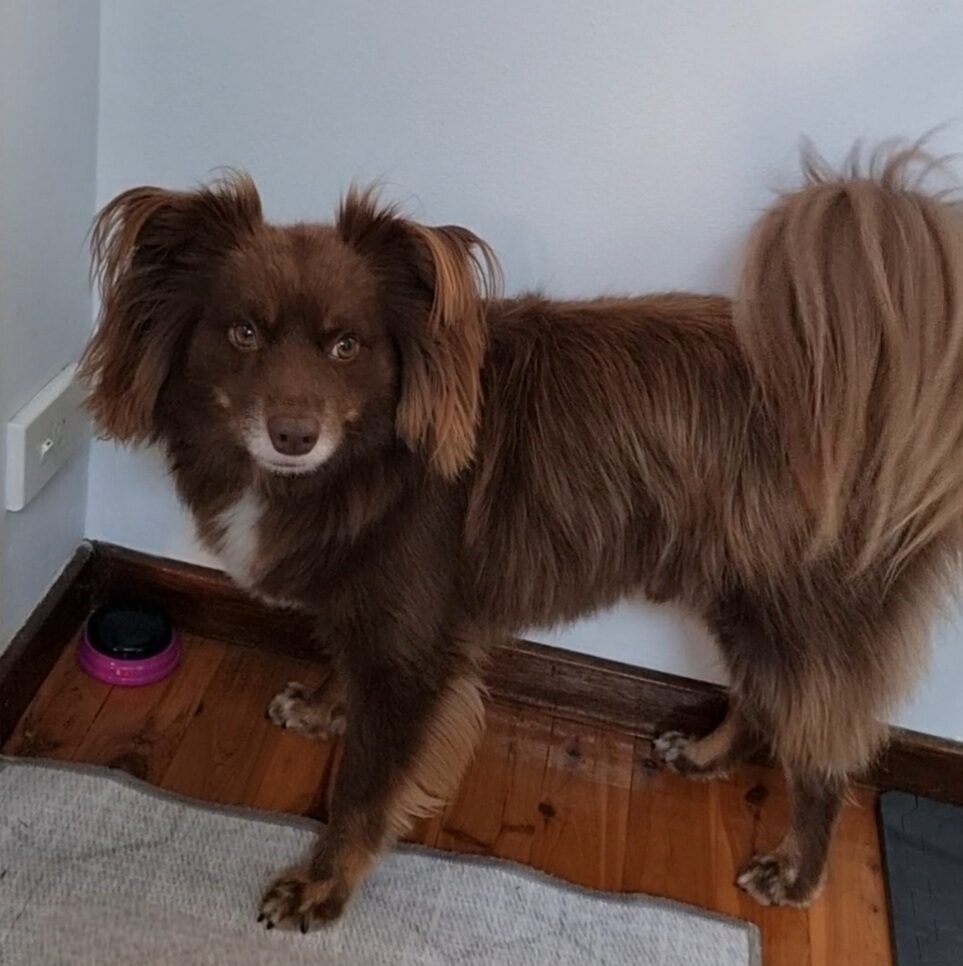
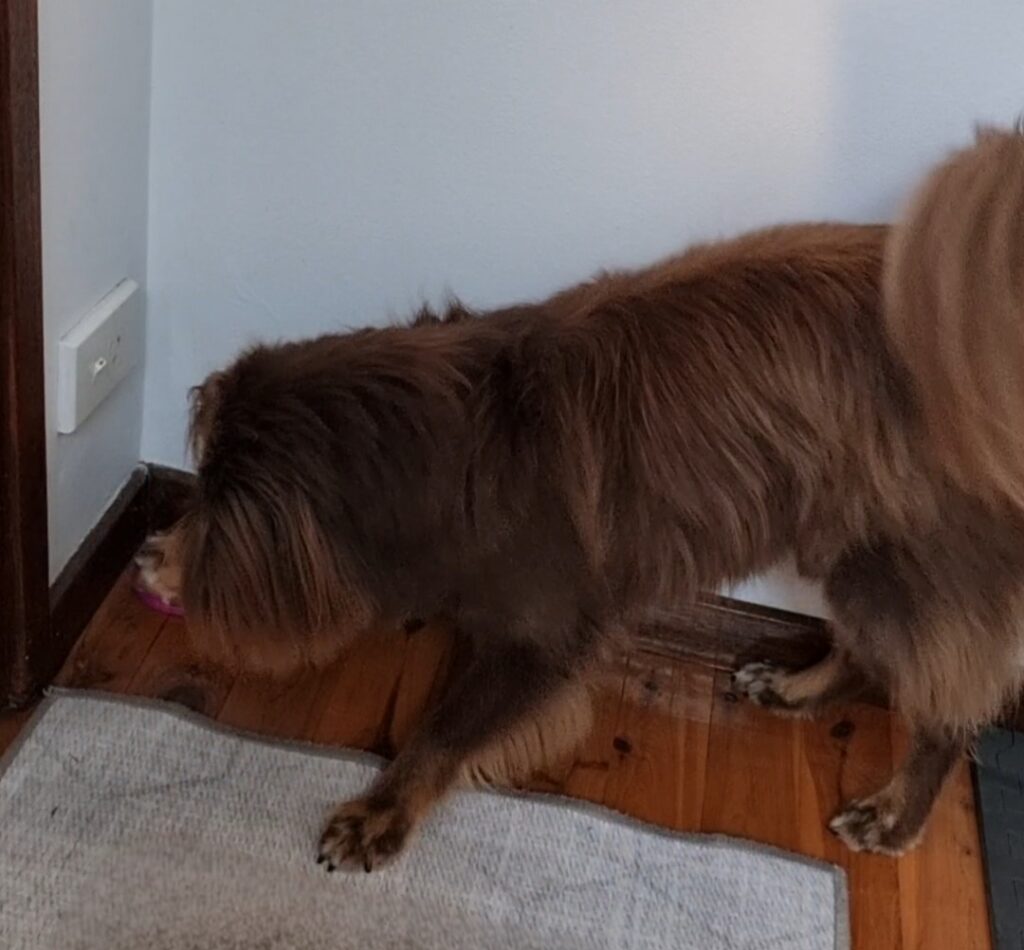
For me, the introduction of dog talking buttons wasn’t about teaching Monte another “party trick.” Instead, I wanted to leverage his intelligence for something far more functional: Autonomy.
When Monte was a pup, our house-training was a 24-hour blur. I was militantly disciplined, – out after every nap, every meal, and every play session. We did the 2 AM garden trips in the freezing cold because I refused to use “wee pads.” I wanted a clear, unbreakable distinction: Business is done outside.
Eventually, I wanted to transition from our passive scheduling to active communication. Monte already understood the context of going outside, but he lacked the vocabulary to initiate it himself. By playing to his intelligence, his most defining trait, I gave him the tools to “speak up.”
The Foundational Training
The success of the dog talking buttons was built on the “grind” that preceded them:
- The 24-Hour Cycle: Alarms every two hours and a total commitment to the leash, even in our own backyard.
- The Bespoke Cue: Using a specific, intentional command for “business” that became the linguistic anchor for his future button.
- The “Yes”: Connecting a reinforcing verbal cue for the successful completion of the task.
Consistency is the Only Currency
This is where most people fail. If you want to talking buttons for house-training, you cannot treat them like a toy or connect the value to treats. A different strategy must be applied:
- The Anchor: Every single time the leash went on for a bathroom break, the button was pressed.
- The Transition: We moved to Monte touching the button himself, followed by an immediate “Yes!” and a trip to his designated spot.
- The Boundary: Naturally, he tried to “game the system” for a recreational sniff. My rule? If the button is pressed, we go to the “business” spot. If nothing happens, we go straight back inside. No deviations. No side-quests.
It took almost no time for Monte to work it out. It is a testament to the breed’s ability to catch on quickly, provided the human at the other end is willing to stay “militantly disciplined.”
THE MonteCaro STANDARD
The number one rule for success with communication buttons is that you must action the request.
If you ignore a button press because you are busy, the button loses its value, and the dog loses trust in the tool.
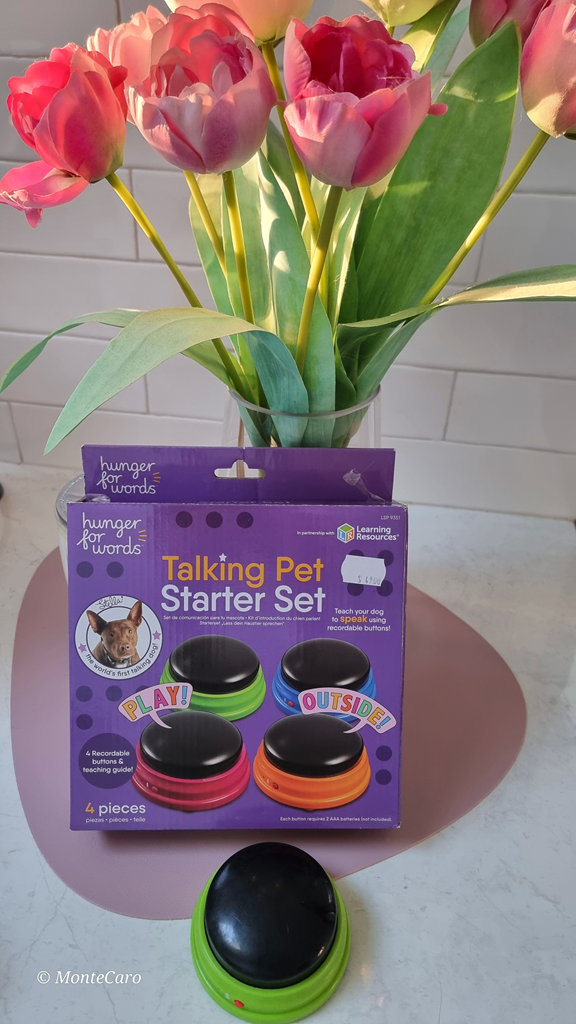
I also chose buttons that allow me to record my own voice. For one, it provides immediate familiarity, but more so, it gave me the flex I needed to use my own bespoke cues. If your training evolves or you realise a specific command isn’t hitting the mark, you also have the freedom to re-record and pivot the purpose of the button as needed.
We eventually introduced a second button for “Backyard Play,” but that one only comes out when I actually have time to engage. The “Business” button is a permanent fixture; the “Play” button is an invitation.
Keeping that distinction clear is how you maintain a consistent standard of communication with a Constant Thinker.
THE MonteCaro TIP
Before you rush out to buy a brand-new set, check the second-hand markets.
Often, the idea of teaching a dog to talk is far more appealing than the reality to make it work. Many owners buy these kits and quickly realise they don’t have the patience. Their loss is your gain; you can often find them barely used for a fraction of the retail price.
Do you have a “Constant Thinker” at home?
If you have been considering Dog Talking Buttons, I would love to hear your “why.” Are you looking for a fun party trick, or are you after a more pragmatic standard of communication? Let me know in the comments below!
Leave a Reply