
Part 7: Monte’s Desexing Twist | The Hidden Complexity of the “Wait”
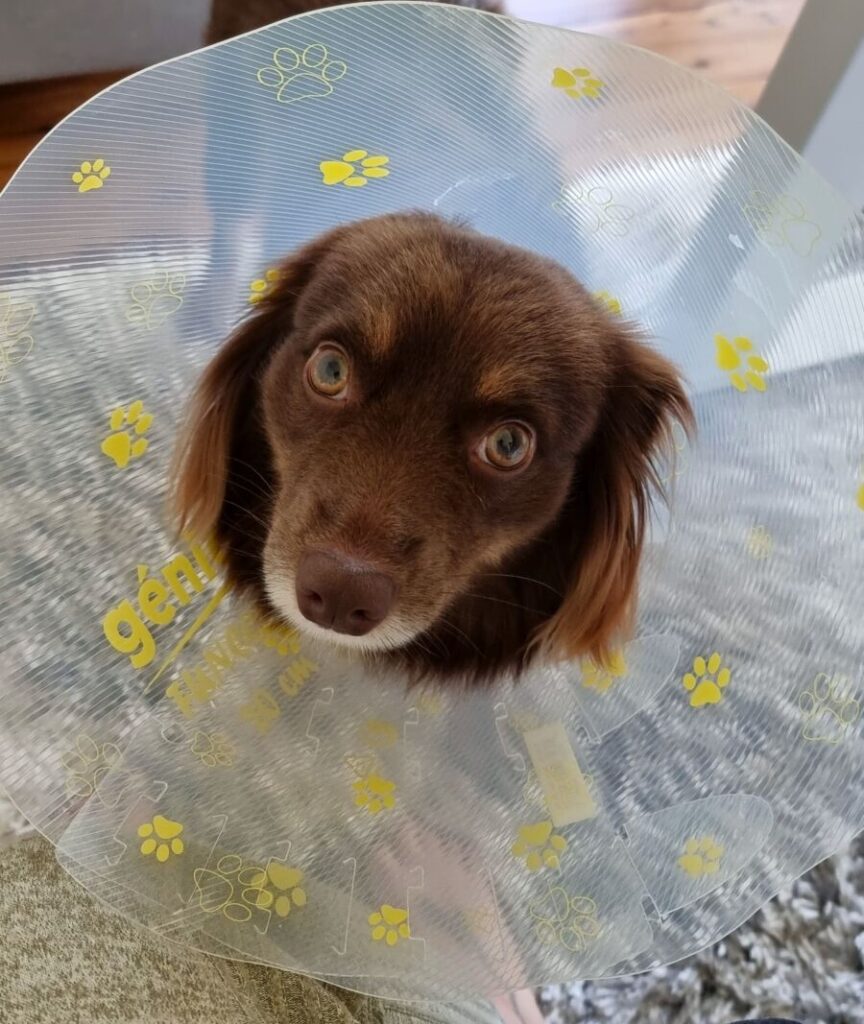
What I wish I knew about delayed recovery for a mature dog is now a permanent chapter in the MonteCaro chronicles, and I hope it serves as a roadmap for anyone else choosing the same path for their companion.
Why We Waited
I was determined to give him the best start. Following the insights that suggest waiting until a dog is fully developed, around age two, is vital for the integrity of their growth plates, joints, and long-term bone health. For a breed as active and agile as a Mini American Shepherd, letting those growth plates settle naturally wasn’t just a preference; it was a non-negotiable.
We were prepared for the surgery, but we weren’t prepared for the medical twist that followed.
I had done all the legwork: I navigated the council requirements, secured the supporting letter from the vet to avoid the excess registration fees, and watched with pride as Monte matured into a balanced, fully-fledged adult. He had no “bad habits” no marking, no aggression, which honestly made it harder to see the need for the surgery. However, as is the case with many purebred contracts, the commitment remained. In February 2024, the time eventually came to book him in.
First time apart
I had never been separated from Monte since the day he came home with me. Leaving him at the clinic overnight was a bittersweet milestone, it felt heavy. There was a profound sense of guilt in not being able to explain to him why he was perfectly fine at drop-off, only to be in pain when I eventually picked him up.
The separation went better than expected, and the following day I brought him home, groggy, sweet, and seeking comfort. I was prepared. I had the recovery pen staged to keep him contained and had cleared my schedule to work from home. We followed the “Dr.’s Orders” to the letter: he remained on a short lead, there was no chasing the cats, and bathroom breaks were strictly functional.
At that moment, I believed we were through the hardest part.
When “Standard Protocol” Fails an MATURE Dog
Everything appeared to be on track until we were prematurely given the green light for short walks. It was then that the first sign of trouble appeared: the empty scrotum was beginning to increase in size.
the “Empty Space Effect” and Scrotal Hematomas
In the stressful hours that followed, I was introduced to a term I hadn’t encountered in my initial research: the “Empty Space Effect.” Because Monte was a fully developed two-year-old, his anatomy was significantly more vascular, and the skin more stretched, than that of a puppy. When the testicles are removed in a mature dog, they leave behind a physical void. Gravity and movement cause fluid to settle in that pocket, a condition known as a scrotal hematoma.
The clinic later admitted that for a dog of Monte’s maturity, the standard after-care plan should have been far more conservative. He required extended, absolute quiet to prevent the body from “pumping” fluid into that newly vacant space. It was a stark reminder that when it comes to recovery, age changes everything.
The Breaking Point
Watching the swelling escalate was incredibly stressful. It eventually reached a point where it was larger than it had been before the surgery. Monte was visibly uncomfortable, unable to find a position to relax without putting pressure on the area.
Despite the protection of the cone, there was a split second where the discomfort must have been too much. In a desperate attempt to find relief, he tried to reach the area. While the cone prevented him from licking, the sharp edge grazed the paper-thin, severely stretched skin.
A frantic trip to the vet followed for stronger regimen of painkillers and sedatives, but the internal pressure was simply too high. A day later, in another moment of agitation, he managed to nip the area again. The hematoma finally gave way and busted open.
It was a bloodbath, – confronting, messy and deeply stressful for both of us. Yet, in hindsight, it was a blessing in disguise. The literal pressure was gone. You could see the instant release it gave Monte.
The Road to Recovery
We spent the following days on high alert, obsessively monitoring the site for any signs of infection. To my immense relief, the area remained clean and began to heal with remarkable speed. By mid-March, the “vibrant Monte” we knew was finally back.
The vet had cautioned me that the skin might not fully “snap back” given how severely it had been compromised and stretched. However, I am happy to report that with time and patience, it eventually returned to normal.
Reflections-Lessons for Delayed Desexing Recovery
People often ask: Would I wait until age two again?
The answer is a definitive yes. I still firmly believe in the developmental benefits of waiting for a high-energy breed like the Mini American Shepherd. However, I would have been far better prepared mentally had I known the specific complications that can come with maturity.
THE MonteCaro LESSON
If your dog is physically mature, the standard “puppy” recovery rules do not apply.
The MATURE Recovery Protocol
- Absolute Stillness: “Minimal movement” isn’t just a 48-hour suggestion; it must be strictly maintained for much longer in adult dogs to prevent fluid buildup.
- Discuss Scrotal Ablation: This is a surgical option where the skin sac is removed along with the testicles. For older dogs with more “stretched” skin, it is a conversation worth having with your vet to eliminate the “empty space” issue entirely.
- Proactive Sedation: Don’t view sedatives as a last resort. Using them early and consistently ensures your dog stays truly still while that internal vascular space heals.
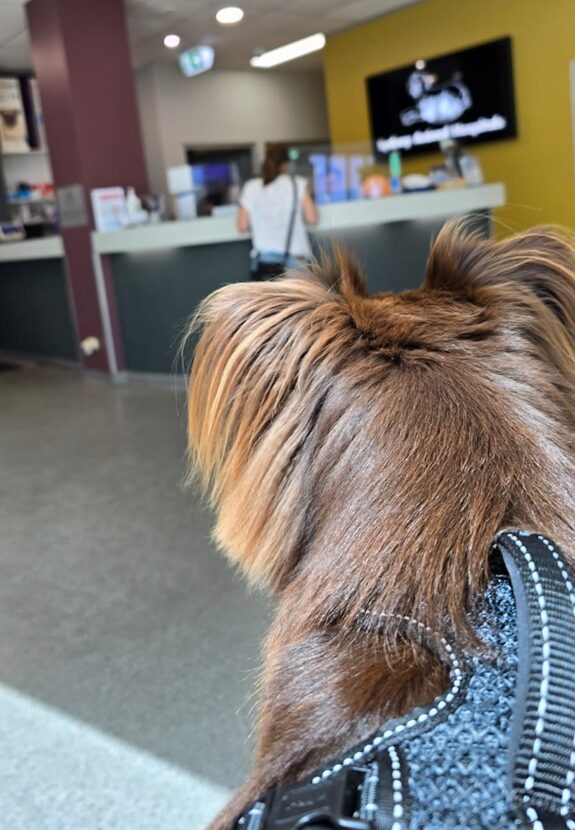 The pre-op check-up: the final step in our research and preparation before Monte’s surgery. Everything was on track, or so we thought.
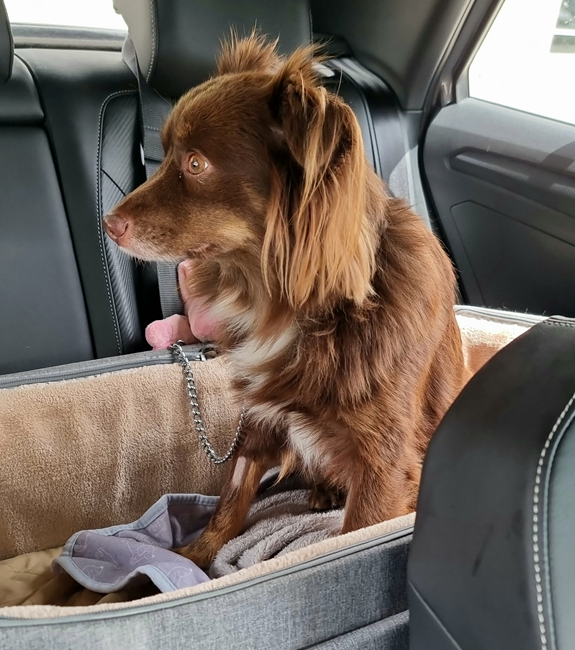 The silence in the car was heavy. They say dogs don’t understand words, but looking at him here in his travel crate, I think Monte already knew.
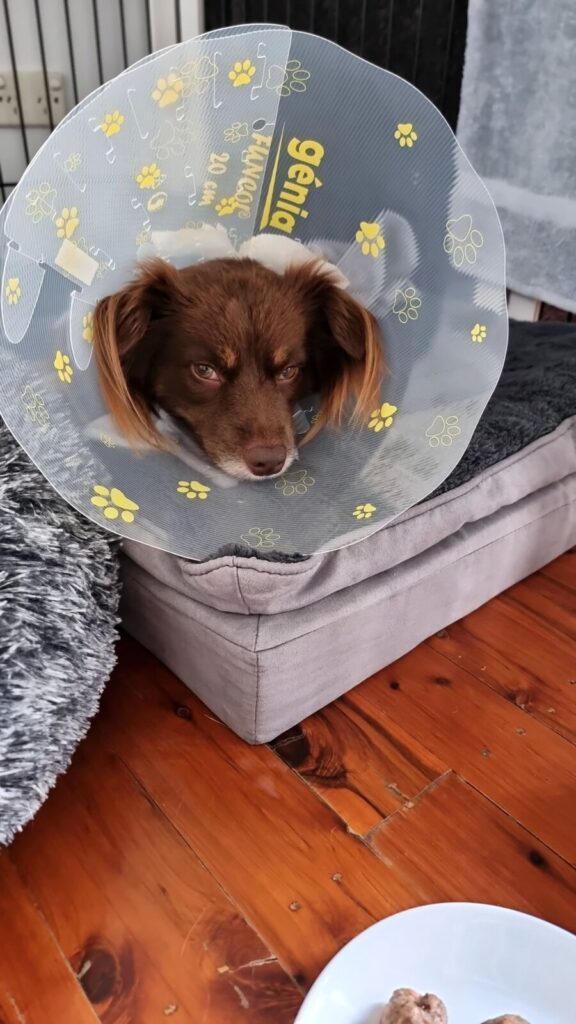 Home again: groggy, sweet, and navigating the ‘cone of shame.’ The standard instructions said this would be the hardest part, but for us, the real challenge was still to come.
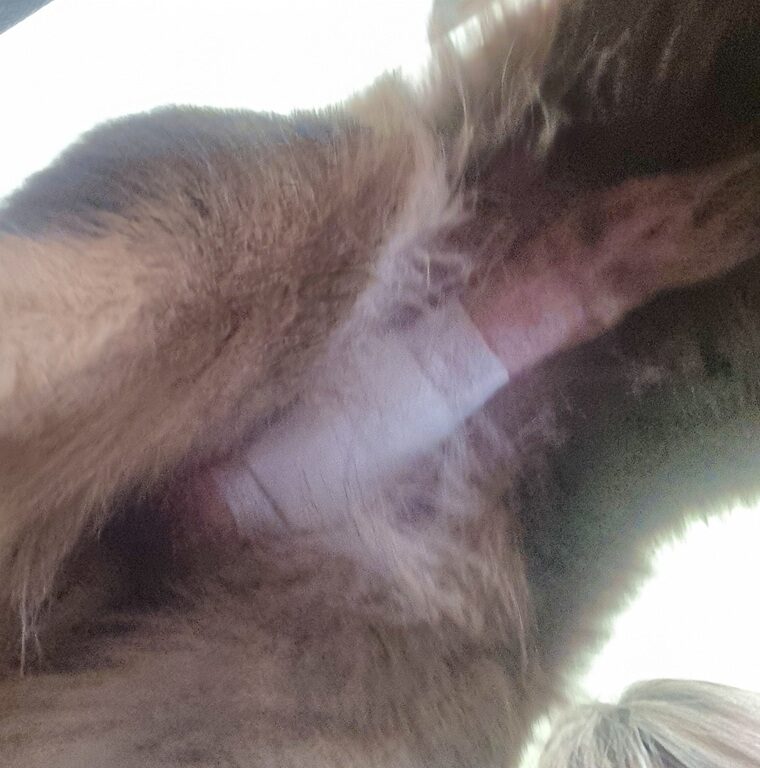 The early days: everything looked exactly as it should. A clean incision, minimal swelling, and a very “standard” recovery path.
- That “Why did you do this to me?” look. It was heartbreaking to see him perfectly healthy one day and in such a state of confusion and pain the next, without any way to explain it to him.
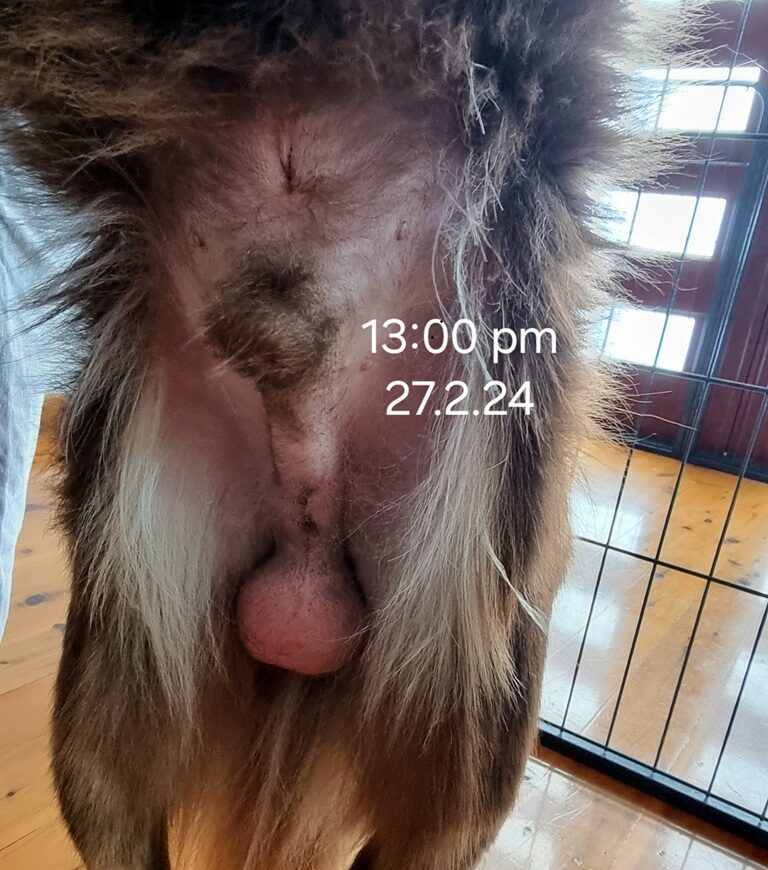 3:00 PM, February 27th. Just after our short, “green-light” walk, the swelling began. This was the first sign that the standard protocol wasn’t going to be enough for a mature dog like Monte.
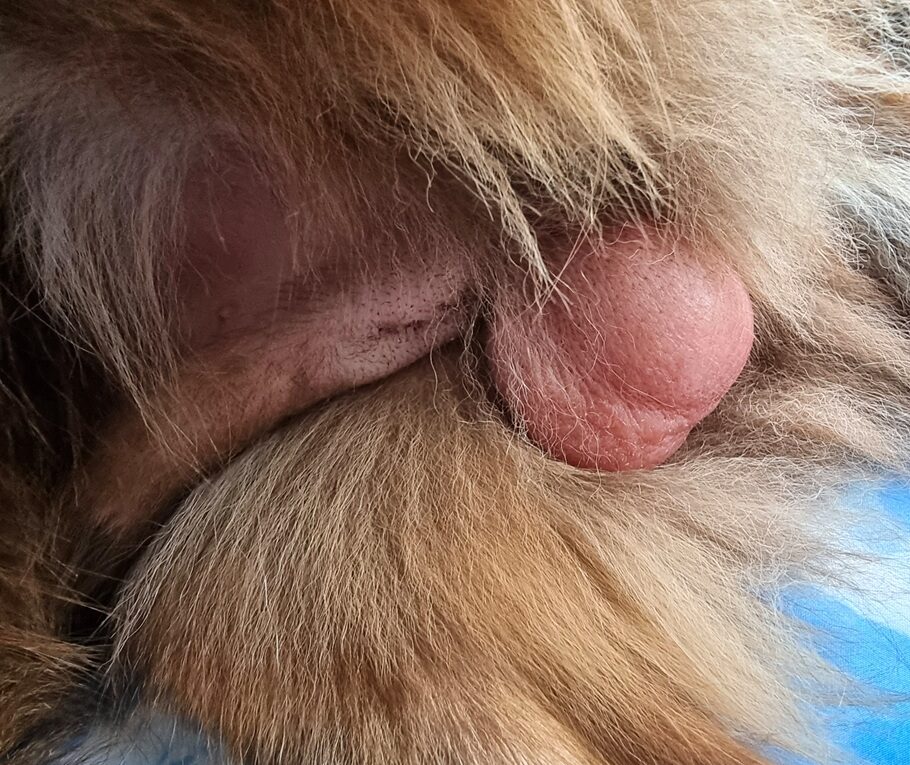 February 28th. The swelling continued to escalate until the empty scrotum was visibly larger than it had been before the surgery. This is the reality of the hematoma that “standard” puppy care doesn’t prepare you for.
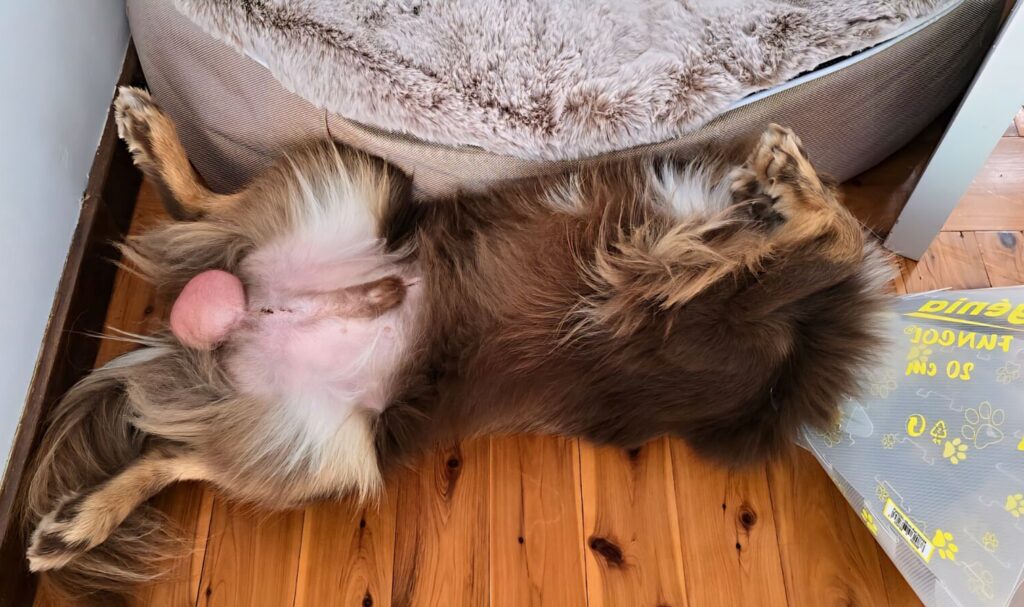 The breaking point: Monte became increasingly uncomfortable, unable to find any position to relax without putting pressure on the swelling.
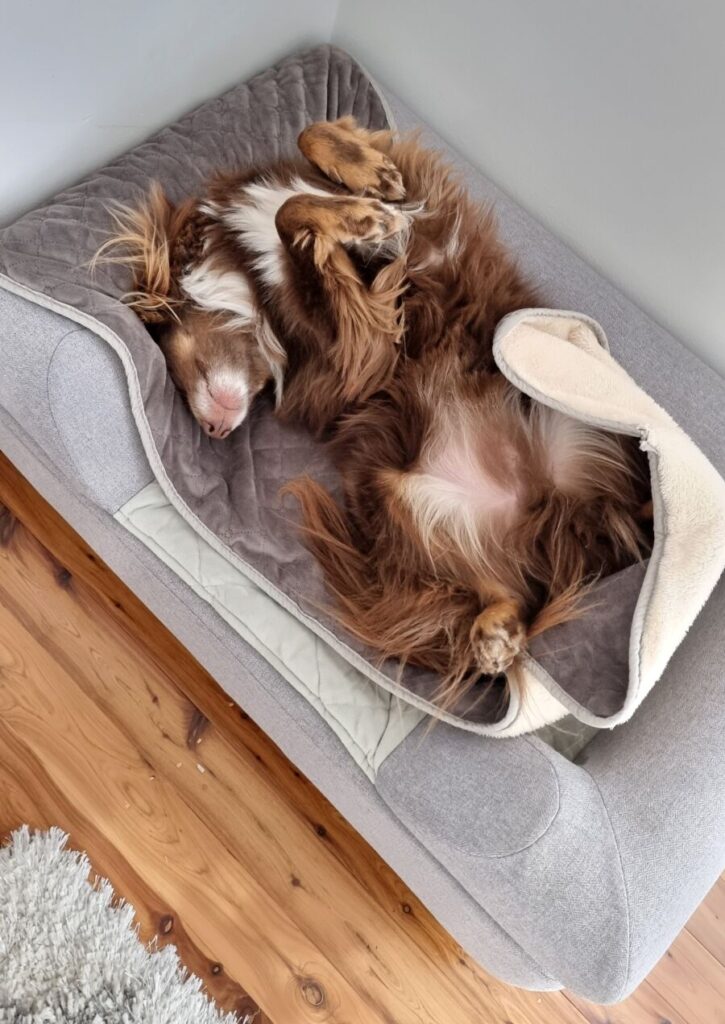 As good as new: the moment I knew he was finally, fully healed. The cone is gone, the comfort is back, and we can finally return to our regularly scheduled programming of ‘intentional relaxation.’
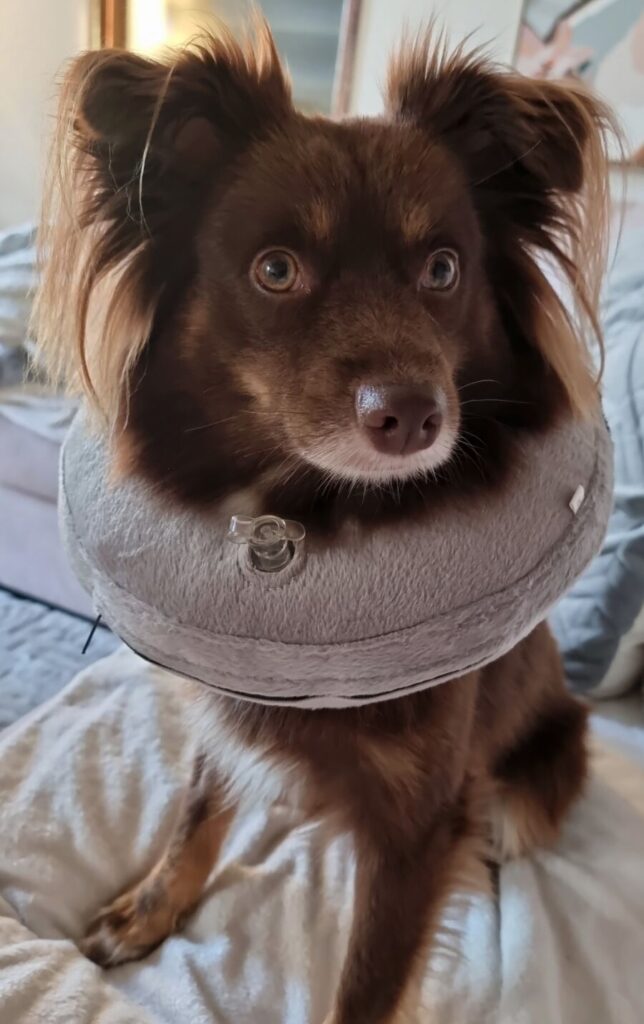 On the home stretch: swapping the ‘cone of shame’ for the inflatable donut was a game-changer for Monte’s comfort and my peace of mind.
Monte is back to his vibrant self now, but this experience was a stark reminder that even with all the research in the world, life with a dog always has a way of teaching you something new.
Ready for the next chapter? Part 8: How To Pick the Perfect Forever Dog Bed | Monte’s Dog Bed Portfolio
The path to the best long-term health isn’t always the easiest one to walk. We chose the two-year mark for Monte’s joints, and despite the “bloodbath” in between, I would make the same choice again for his future. If you are currently in the middle of a stressful recovery, hang in there, the “vibrant” version of your best friend is waiting on the other side.
What is one thing you wish you’d known before your dog’s surgery? Let’s chat in the comments.
What is a scrotal hematoma in an adult dog after desexing, and what steps can owners take to support a safe recovery?
Thank you for the question! I am not a vet, but this is what I learned from my own experience going through it with Monte.
To put it simply, because an adult dog is fully developed, their anatomy is much more vascular than a puppy’s. When they are desexed, it leaves behind a physical void – what I call the “Empty Space Effect.” If they move around too much, gravity causes blood and fluid to pool right into that vacant space, creating a tense swelling called a scrotal hematoma.
Supporting a safe recovery is all about enforcing “absolute” stillness to prevent that pooling. When we were in the thick of it, three things saved our sanity: relying on the prescribed calming medication consistently, keeping him contained in a small puppy pen, and using a short leash at all times. Even inside the house and for quick toilet breaks, the leash was non-negotiable to stop any sudden, rapid movements. It takes a lot of patience, but keeping them truly quiet is the secret to letting it heal.
I hope you found this helpful!


Leave a Reply