
Indoor Enrichment: Managing the “Constant Thinker” on Rest Days

How to channel high-drive energy when the park isn’t an option.
For a dog like Monte, physical exercise is only half the battle. As a “Constant Thinker,” his battery isn’t just charged by running; it is fueled by his need to solve problems. On those days when the weather turns or our schedule doesn’t allow for a long run and a “sniffari” in the park, I lean heavily on indoor dog enrichment to keep him balanced.
The challenge isn’t just about burning calories, it is about exhausting the mind. I am a firm believer that a well-behaved, balanced dog is the result of repetition and mental engagement. If you don’t give an intelligent dog a job to do, they will usually audition for a job you didn’t want them to have.
Ditch the Bowl: Every Meal is an Opportunity
The foundation of our indoor stimulation starts with a simple rule: Monte does not get his dry food in a bowl. Aside from his raw meals, we “ditch the bowl” to turn breakfast and dinner into interactive sessions.
- Trick & Obedience Training: We use mealtime to reinforce the basics or master a new trick. Regardless of age, the repetition keeps his responses sharp and his focus on me.
- The “Search” Cue: This is Monte’s favorite game. Whether I am throwing treats or hiding them around the room, the “Search” command triggers his natural instinct to search and problem-solve.
- The DIY Enrichment Box: Never underestimate the power of a large cardboard box filled with safe packaging. Hide a few treats at the bottom and let them rummage through; for Monte, the tactile experience of moving things aside to find a reward is deeply satisfying.
The Toolkit for Problem Solvers
When I need Monte to stay engaged independently, I lean on a rotation of puzzles and tactile toys. The goal is to make him work for every morsel, slowing down his heart rate and focusing his brain.
- The Fabric-Stuffed Ball: We have a specific hollow ball that I use for “extraction” games. I will roll up treats in strips of fabric or hide them in small pieces of paper and stuff them inside. He has to figure out how to pull the fabric out or tear the paper to get to the prize.
- Licky Mats & Slow Feeders: These are staples for lowering arousal. The repetitive motion on a snuffle or licky mat is naturally calming and keeps him busy while I am working or decompressing.
To keep things exciting, I like to fill these toys or stuff our DIY fabric puzzles with healthy, single-protein rewards. If you want to skip the store-bought markup, you can see exactly how I prep our batches at home in my DIY Dehydrated Dog Treats Guide, ensuring every puzzle is packed with high-value motivation.


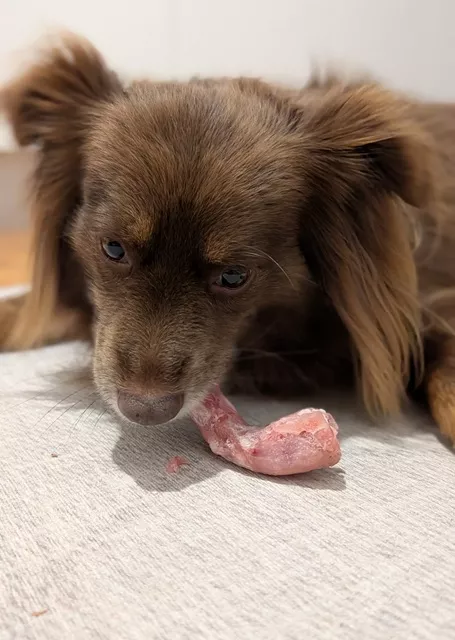
The Secret Weapon: The Beef Bully Stick & Frozen Chicken Necks
If I need Monte to be quiet and settled, usually at night, I used to reach for a natural chew. However, after getting some crucial dental advice from our vet regarding the risk of cracked teeth from hard chews like antlers, we have pivoted our evening routine.
Now, our go-to calming options are natural beef bully sticks or raw frozen chicken necks. The chicken necks pull double duty as part of his dental routine, which you can read more about in our full Dog Dental Care Routine Reality post.
The Chew Protocol:
- Biological Satisfaction: Gnawing on a quality natural chew isn’t just a distraction; it is a form of Occupational Enrichment. Chewing releases endorphins and dopamine, acting as a natural de-stresser for a dog’s brain. Think of it as the canine equivalent of settling down with a complex crossword puzzle to quiet the mental noise of the day.
- Sensory Engagement: Unlike synthetic rubber toys, a natural chew offers a changing texture and an engaging chew experience. Watching Monte figure out the best angle to hold it with his paws is pure problem-solving in action.
- The Settle Factor: It is the perfect way to help him transition into sleep mode at the end of the day. By satisfying that innate urge to chew, he lowers his own arousal levels naturally.
- The Dental Difference: Hard antlers posed a real risk to his dental health. Incorporating safe mechanical alternatives like raw frozen chicken necks alongside his daily care has made a big difference in supporting healthier gums and keeping tartar manageable.
THE MonteCaro STANDARD
Enrichment is not a “set and forget” activity.
To maintain a balanced dog, we practice what behaviorists call Contrafreeloading – the idea that many animals actually prefer to work for their rewards rather than having them handed over for free.
By keeping indoor enrichment sessions short and starting off simple.
I ensure Monte stays fully engaged without hitting a wall of frustration.
Building that initial confidence is key. This intentionality is what keeps his brain sharp and his focus on the task at hand. We aren’t just “killing time”; we are providing a functional tool that serves his mental, biological, and physical needs.
Even when using a puzzle or a DIY cardboard box, I stay in the room. This ensures the activity remains a bonding moment rather than just a distraction. By providing these outlets, we release the energy that would have been spent at the park, ensuring Monte remains a calm, satisfied companion even when we are stuck indoors.
Indoor Enrichment Rotation
- Snuffle feeding Mat
- Lickymat with suction cap
- Interactive treat ball
- Pet IQ Toy Lick mat
- Happy Tails Tough Tyler feeder pet toy
- Treat dispenser for boredom release
- Snuffle roll out ball
- Hol-ee Roller
- Cardboard boxes (all shapes and sizes)
- Toilet rolls
- Paper towel rolls
- Egg cartons
THE MonteCaro TIP
Before you spend a fortune on high-end plastic puzzles, look in your recycling bin.
A finished roll of paper towels or a toilet paper roll can be folded at the ends with a few treats inside. It provides the same mental stimulation as an expensive toy, and the “destruction” phase of tearing the cardboard is a great way for a dog to work off frustrated energy.
Just be ready to go on “confetti patrol” afterward!
Disclaimer: Fully self-funded and non-sponsored. Every item in this enrichment guide was chosen for its durability and functionality for a working breed. We receive no kickbacks for these recommendations; they are simply the tools that work for us.
Problem-solving is Monte’s middle name, but a “Constant Thinker” is always looking for the next level of difficulty.
I am constantly on the lookout for new ways to keep his regime fresh and his brain ticking, especially those DIY hacks that don’t cost the earth but provide maximum engagement.
What is your “secret weapon” for indoor enrichment?
Whether it is a specific puzzle that stumped your dog, a unique natural chew that doesn’t smell, or a creative way to use household recycling, I want to hear about it!
Drop your suggestions in the comments, I am keen to add some new ideas to Monte’s rotation to keep things interesting.
Why is mental stimulation important for dogs, and what are some indoor activities that can help keep them engaged?
Thank you for stopping by! For a lot of dogs – especially working breeds or what I call “Constant Thinkers” – physical exercise is only half the battle. Mental stimulation actually triggers a chemical reset in their brain, lowering their heart rate and burning that mental energy so they can truly settle.
My absolute favourite indoor setup is the DIY enrichment box (just hiding treats inside a cardboard box full of packing paper) or stuffing small pieces of fabric with treats inside a hollow rubber ball. It forces them to problem-solve and work for their food, which dogs actually love doing!
My biggest tip if you’re just starting out is to keep it easy so they don’t get frustrated. For the enrichment box, I like to scatter some loose kibble right on top so they get an immediate win, and then wrap just a few pieces up in paper to make them hunt a little harder. Let me know if you give any of the recycling hacks in the post a try!


Leave a Reply