
Part 11: The Dental Reality Check | Instagram Smiles, Second Opinions, and the Dog-Mum Guilt

A raw, honest confession: I have been carrying around a surprising amount of dog-mum guilt lately, and it is entirely centred around Monte’s teeth.
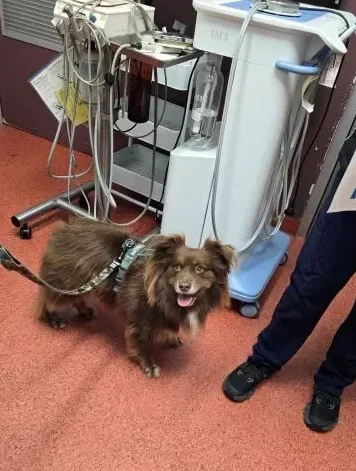
Monte turned four in March 2026. Somewhere between our daily bushwalks and ordinary evening routines, I started looking closer at his smile. His teeth simply are not the brilliant, pearly white you see plastered across dog Instagram. While some of those photos are undoubtedly edited, many are not. I caught myself wondering: How? Surely not every dog owner has a textbook-perfect, twice-daily brushing routine seamlessly integrated into their busy lives.
The Puppy Learning Curve
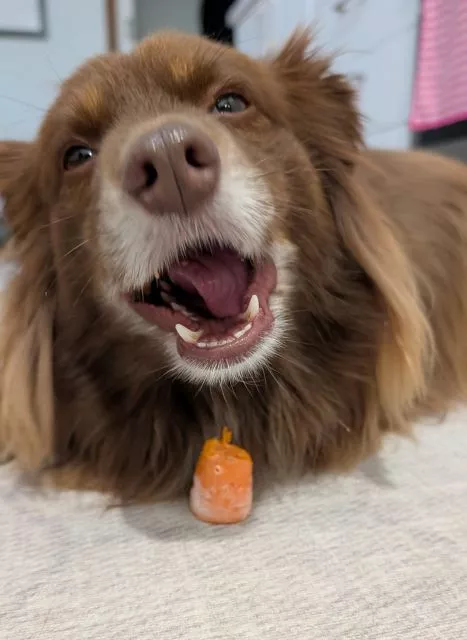
I have always prioritised Monte’s health. He eats quality food, primarily a balanced frozen raw diet, with seaweed plaque powder sprinkled over his meals, occasional supervised antlers, and frozen carrots to chew on.
Admittedly, I missed introducing a toothbrush when he was a puppy.
Monte is my first dog, and back then, the learning curve felt immense. Between toilet training, obedience, mental enrichment, and socialisation, daily canine dental hygiene simply slipped off my radar until it was already an established oversight.
When I asked around, my friends were split. Half of them had never brushed their dogs’ teeth either, yet their dogs’ smiles were noticeably brighter. The common denominator? Raw bones. Because of genuine fears about splintering, choking, or throat blockages, raw bones were the one thing I had always avoided giving Monte.
Determined to sort this out, I decided to seek professional advice.
Two Vet Visits and a Reality Check
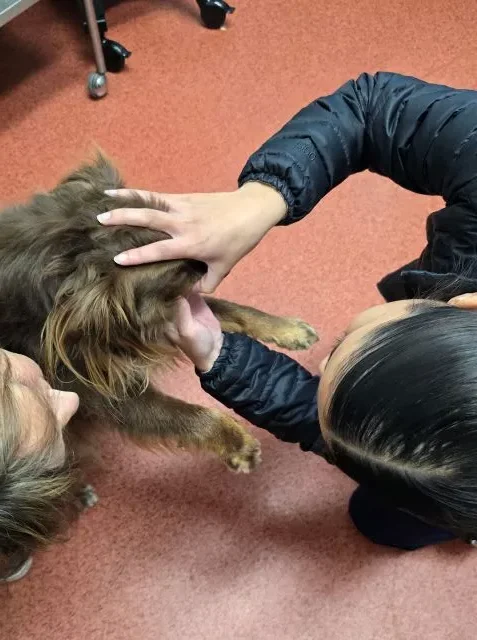
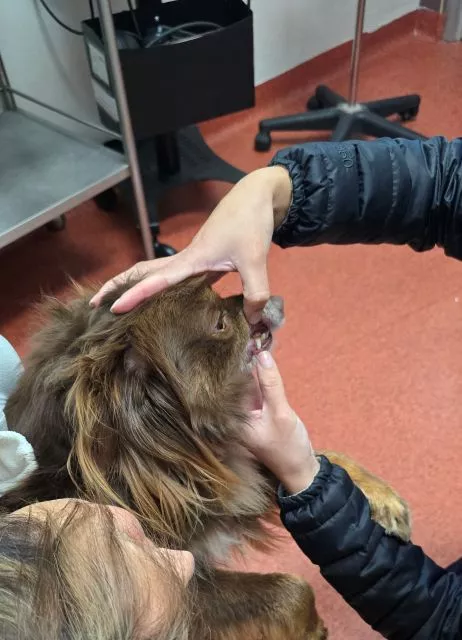
I started with our regular vet. He took a quick look, graded Monte’s teeth at a mild Grade 1, and noted that his gums were completely healthy and pink. His verdict was refreshingly blunt:
- Plaque powders: In his experience, they do very little of clinical significance.
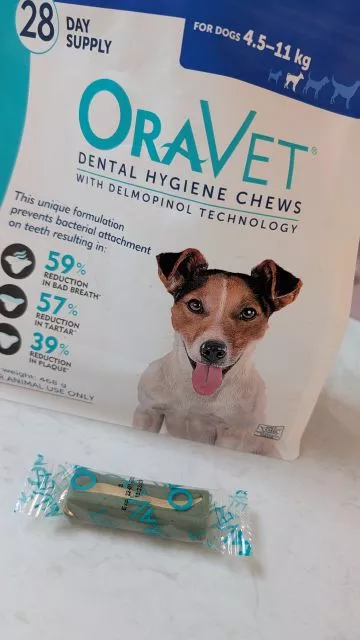
- Chews: He strongly advised against hard antlers due to the risk of slab fractures and chipped teeth, recommending veterinary dental chews (like OraVet) instead.
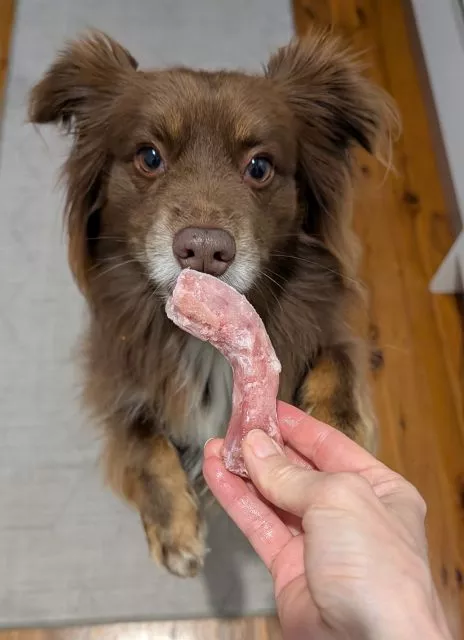
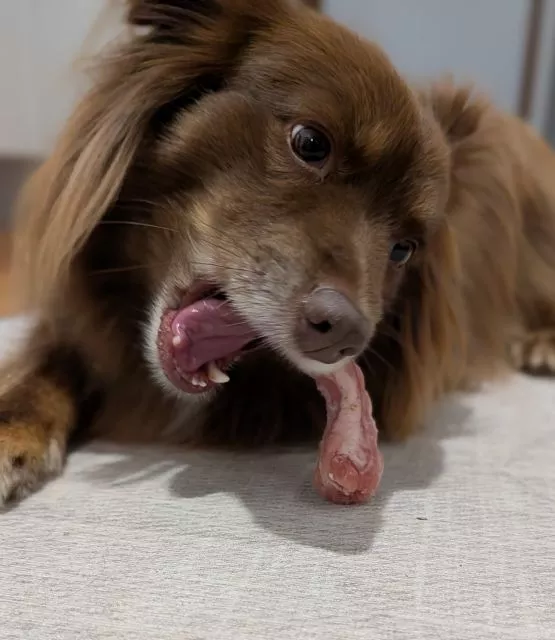
- Raw bones compromise: Acknowledging my safety worries, he suggested frozen chicken necks as a softer alternative for natural mechanical cleaning.
- Action: There was no immediate need for an anaesthetic clean, just monitor and maintain.
Still uneasy, I noticed a local veterinary hospital running a dental promotion throughout July and August. With days left before the end of the month, I booked in for a second opinion.
The second vet agreed entirely with the first. Monte’s gums are in great shape, with only minor staining and light tartar. She mentioned their 10% promotional discount on a Grade 1 dental package. When I asked directly if she medically recommended doing it now, she candidly admitted no. It was not a medical necessity, just an available special.
It felt a bit like a “would you like fries with that?” moment.
Putting a dog under general anaesthesia carries real risks, and undergoing a procedure purely for aesthetics felt like vanity over care. Both vets also confirmed a sobering reality: no amount of home brushing, chews, or treats will reverse existing tartar and turn teeth back to pure white. Only a professional ultrasonic scale and polish can do that. All those miraculous “before and after” chew treat adverts? Mostly marketing.

Ten Days into Our New Routine
Not quite ready to jump straight into a full general anaesthetic, I started doing some digging. I came across specialised non-sedative dental cleaning services (such as the gentle cosmetic cleaning offered at a clinic in Mosman). It sounded like an intriguing option, a way to lift superficial staining and light tartar without putting Monte under, provided he can handle it.
Before considering a professional clean of any kind, though, I wanted to establish a solid, low-stress daily routine at home first.
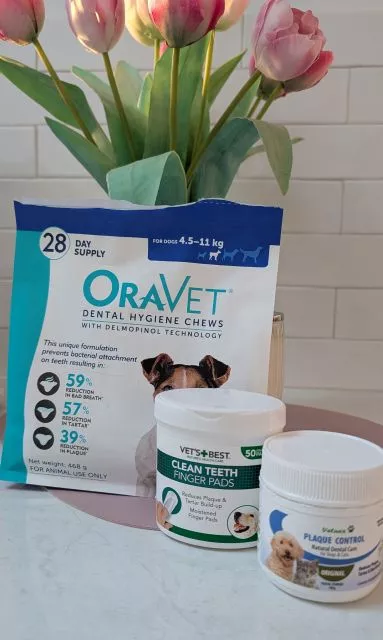
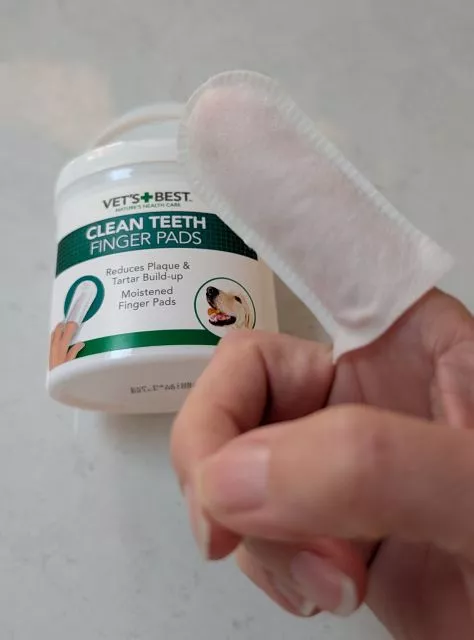
Taking our vets’ advice on board, I jumped online and ordered the recommended OraVet chews alongside some Vet’s Best clean teeth finger pads. Reading through the OraVet clinical brochure, the science behind delmopinol preventing bacterial attachment sounded legitimate enough to warrant a proper trial.
The bright green colour makes me naturally a little sceptical. A deeper look into the active ingredients is definitely on the cards to see if a cleaner alternative exists. At the same time, extra calories matter for a dog Monte’s size, making portion control an important part of the equation.
For now, our evening routine has had an intentional overhaul:
- Dietary adjustments: We swapped out the small evening kibble portion to alternate between a frozen chicken neck one night and an OraVet dental chew the next. The raw frozen chicken necks have been an immediate, success. Monte absolutely loves them.
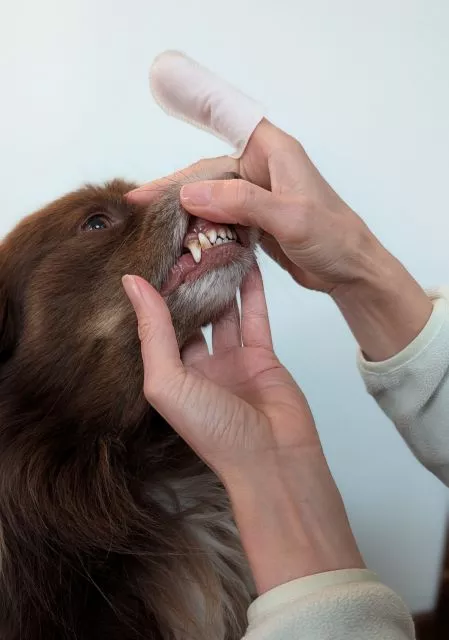
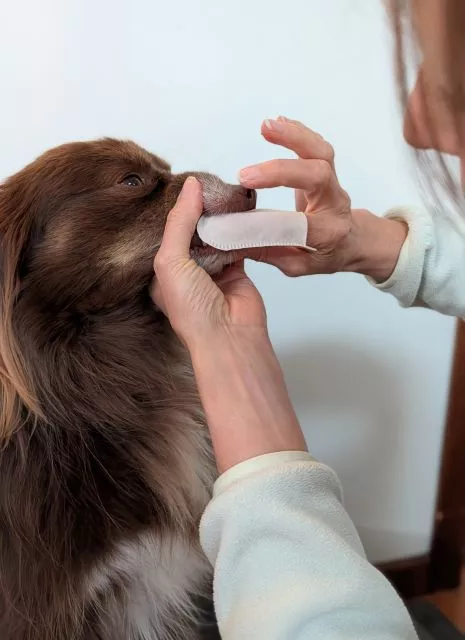
- Step-by-step mouth desensitisation: I started with soft dental finger cloths to build his comfort with mouth handling before introducing brushes and dog-safe toothpaste.
Negotiating with Monte (and a couch Cushion)
Monte’s initial verdict on the finger pads was decidedly unenthusiastic. The moment he spotted me approaching with that little white wipe, he would hop onto the lounge and firmly burrow his face behind a cushion.
I refuse to rush or force it. Building cooperative care takes patience, so I quickly came up with a simple bribe. I now cut his dental treat in half. He gets one half before we start to settle him, and the second half as an immediate reward the moment we are done.
That small tweak made an instant difference. Because he is eager for that second half, he is now far more willing to sit quietly through a gentle wipe of his teeth. The more comfortable he gets letting me work around his mouth, the more I start to think that maybe we have a fighting chance of lifting some of this surface buildup after all.
Naturally, now that I have been researching canine dental care, my social media feeds are flooded with targeted adverts. Another Plaque Control product keeps popping up with very promising reviews. I will likely look into trying that once our current tub of seaweed powder runs out.
Our Ground Rules: Trust Over Perfection
- Respect the “opt-out”: If Monte retreats behind his cushion, I pause rather than chasing him. Patience builds lasting trust.
- Keep it under 60 seconds: Tiny, rewarding sessions prevent frustration and keep the mood positive.
- Outer surfaces only: Plaque builds most heavily on the cheek-facing molars and canines; there is no need to pry his jaws open.
- Strictly dog-safe: Human toothpaste contains foaming agents, fluoride, and toxic sweeteners like xylitol.
If I could turn back time, I would have introduced mouth handling and brushing from day one. The reality is that you learn as you go, and all you can really do is start from where you are right now.
Ten days in, our progress is small rather than groundbreaking, but it is genuine progress.
Even though both vets assured me home care will not reverse set tartar back to sparkling white, I am curious to see how much improvement we can achieve by combining these daily habits.
If this routine keeps his gums thriving and allows us to push out the need for a full anaesthetic clean for quite some time, that is a huge win. Once Monte is completely comfortable with regular mouth handling, trying that gentle non-anaesthetic clean in Mosman might be the perfect next step to reset his teeth before continuing our daily care.
I will update this post as things evolve. In the meantime, we are taking it one quiet evening at a time, celebrating healthy pink gums and a routine built on trust, even if his smile is a little more “real life” than Instagram perfection.
Full Disclosure: This is not a sponsored post. I purchased all the products mentioned, including the OraVet chews and finger pads, myself. This is simply our personal experience.
A friendly reminder: I am not a vet or a veterinary dentist! Monte’s dental routine is based on consultations with our own vets and what currently works for him. Every dog’s dental needs, health status, and tolerance levels are unique, so please chat with your vet before introducing raw bones or changing your pup’s dental care routine.
Every dog is different, and finding a balance between theory and real life is always a work in progress. Have you tried cooperative care or non-sedated dental cleans with your dog?
I would love to hear your experiences and tips.
Leave a Reply