
Part 10: When the Ground Shifts | Navigating Monte’s Bilateral Luxating Patella Diagnosis
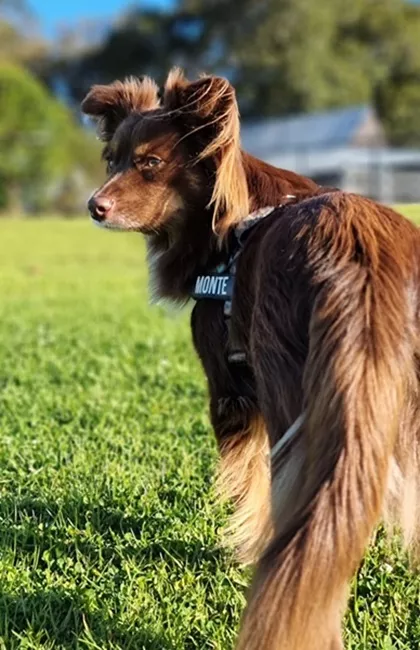
Intro & The Backstory
If you have been following along with our journey, you might remember the nerve-wracking weeks after Monte’s desexing procedure. Dealing with an unexpected scrotal hematoma and a stressful recovery was tough. If you haven’t read about that ordeal yet, you can catch up on it here.
I honestly believed we had paid our dues when it came to stressful veterinary surprises. I thought the hardest chapters of his early health journey were behind us.
Turns out, life had another plot twist waiting in the wings.
Doing Everything ‘Right’
When you bring a puppy into your life, especially as a first-time dog owner, you want to do everything humanly possible to set them up for a long, healthy life. Doing thorough homework is simply in my nature.
- The research: I deliberately avoided lines with known health challenges.
- The breeder: I chose a reputable breeder, vetting her to ensure her lines were clear of known issues and her dogs DNA tested.
- The timeline: I delayed his desexing until he was two years old, ensuring his growth plates fully developed.
Biology is never a guarantee. However, I felt I had managed the risk diligently. To some, this might feel over-the-top, but it gave me peace of mind.
Then, when Monte was just over two years old, we were at the park like any other day, burning off energy with his favourite Chuckit! ball.
Despite watching him closely, I don’t even know what happened. He came running back with one hind leg pulled up. Even worse, he was completely unfazed and still keen to keep playing. I checked his leg and gave him a gentle massage. He put it back down, but a lingering limp remained. – Off to the vet we went.
The Unexpected Blow
What we initially thought was just a minor muscle strain turned into a completely unexpected diagnosis: bilateral luxating patella. Even though Monte had only pulled up and favoured one leg at the park, the examination confirmed that he actually had the condition in both hind legs.
To give a tiny bit of context for anyone unfamiliar with the condition, a luxating patella simply means the kneecap (patella) slips out of its normal groove in the knee joint. It is measured in four different grades of severity. In the earlier stages like a Grade 2, the cap can pop out, often sliding back in on its own or with a little movement, which is what we sometimes see when Monte momentarily lifts or extends his leg. Over time, however, the wear and tear can deepen the groove or wear down the cartilage, and there can come a point where the cap no longer pops back in easily without surgical intervention.
I am not a vet, and it is not my intention to try and break down the complex medical mechanics of the condition here. More importantly, if you are navigating this with your own dog, you will be having these exact conversations with your vet. Every diagnosis comes with its own set of grades, and depending on the severity, no two situations look quite alike.
The emergency veterinary hospital we visited on a Sunday went straight for the surgery pathway. They referred to it as a genetic defect that is quite common in small and miniature dogs. Perhaps that was textbook fact, but none of it rang true to me. How could this happen after all my vetting? How could this be anything other than a sudden injury?
The surgery sounded invasive, with no guarantee and required an extensive recovery time. That second point was an immediate alarm bell, with flash backs to what we had gone through during our desexing ordeal.
We made no decisions right then and there. We gathered painkillers and anti-inflammatories, and went home to regroup and digest what we had just been told. I also contacted the breeder on a “please explain” basis. She seemed surprised and even offered to contribute to surgery costs if we chose that path.
Seeking clarity
I asked around for recommendations and took Monte to another vet for a second opinion.
Although the diagnosis was re-confirmed at a Grade 2, this vet did not recommend surgery for his level. Instead, he stronlgy advised against fetch games, agility, or any activities involving erratic movements and sudden direction changes.
In other words, he told us to avoid everything Monte lives and breathes for, everything that makes him truly happy.
The Trap of Hyper-Vigilance
I didn’t quite know how to digest this information, and I soon found myself getting rather paranoid. I kept watching him walk, questioning every little skip or bunny hop that I once found cute.
Finding out your dog has a structural condition in both back legs feels heavy, especially when you pride yourself on keeping them fit and active. It is so easy to fall into the trap of hyper-vigilance:
- Turning play into an anxious patrol
- Watching their every step
- Second-guessing every sprint
After weeks of inner turmoil, we faced the reality that this lifestyle is unsustainable. Accidents happen, and worrying constantly about ‘what-ifs’ drains the joy out of life. We had to come to terms with his structural weakness and learn to be mindful without the constant worry.
Redefining Our Routine
I stopped pursuing agility training. Hoopers was suggested instead because there is no jumping, but Monte and I got bored after a while. Honestly, it felt like a tease watching other dogs do agility right next to us. That is why we shifted our focus toward scent work, trick training, and peaceful trail walks.
This transition was not easy, and to be honest, it still isn’t.
Monte is 4 now. In the time since his diagnosis, he has only had two minor incidents where he pulled a hind leg, requiring a short course of anti-inflammatories and enforced rest. Overall, we haven’t noticed him constantly extending his legs to pop the cap back in, nor does he look awkward on outings. But it is always on our minds, some days more than others.
Managing this condition feels much harder with a high-energy herding dog than a toy ‘handbag’ dog that cares less about high-octane games. That doesn’t mean it isn’t equally stressful for any owner, though.
At the end of the day, we just want our dogs to be well, feel safe, and live a happy life. We are still figuring it out, one trail walk at a time.
Navigating a Luxating Patella: A Real-World Checklist
If you find yourself holding a similar diagnosis and wondering how to best get your head around it, here are the key takeaways I wish I had known to keep me grounded:
- Take a breath and get a second opinion: An emergency or single vet visit can push you toward a rushed, one-size-fits-all surgery recommendation. Give yourself permission to pause, decompress, and consult a trusted vet or specialist who looks at the whole dog, not just the knee joint.
- Understand that a Grade 2 is a management grade, not an emergency: If surgery isn’t immediately necessary for your dog’s grade, you have choices. It is entirely possible to manage the condition conservatively with the right approach.
- Reframe your relationship with exercise: Letting go of high-impact games (like aggressive fetch or agility) is heartbreaking when it is what your dog loves most. But trading those for scent work, trick training, and structured trail walks protects their joints without stealing their joy.
- Watch the muscle, not just the knee: Building and maintaining strong, supportive hindlimb and core muscles is your best natural brace. Keep them lean, fit, and moving safely on even terrain.
- Let go of the hyper-vigilance: You cannot wrap them in bubble wrap, and accidents will happen. Constantly second-guessing every step or skip takes the joy out of life for both of you. Focus on being mindful, not paranoid.
- Trust your gut: No amount of homework or pre-planning can bulletproof us against every curveball. When the unexpected happens, trust your instincts, lean into your connection with your dog, and remember you are the best person to navigate this with them.
Ready for the next chapter? Part 11: The Dental Reality Check | Instagram Smiles, Second Opinions, and the Dog-Mum Guilt
If you are navigating a similar diagnosis with your own dog – or if you have ever had to completely rethink your routine after an unexpected medical curveball, I would love to hear from you.
Drop a comment below or come say hello over on Instagram.
Leave a Reply